Thank you, Jessica Ullian, for the great interview!
Tuesday, May 22, 2012


Tuesday, May 01, 2012
Friday, April 13, 2012
Rejections: A view from the other side of the desk

First and foremost, I am a writer. But I have also been Editor-in-chief of the online journal r.kv.r.y. for about a year and a half now. It's been a wonderful, enriching, exhausting, eye-opening experience. So much so, that I thought it might be valuable to share some of what I've learned from my time spent on the other side of the desk.
I took on the challenge of editing the journal for three main reasons. First, I had been published by r.kv.r.y. in the past and I liked their mission (literary work on the theme of recovery) and I respected their founding editor Victoria Pynchon a great deal.She loved her journal but found that she didn't have time anymore to give it the attention she would have liked, so in the summer of 2010 she put out a call on Facebook for someone to take it over. I hate to see good work die out, so I volunteered.
Secondly, I have always wanted to be part of the side of publishing that helps authors get their work out into the world. I didn't want to only be an author clamoring for space herself. I think it's important for writers to give back to the literary community they belong to, and I saw this as an opportunity to do that.
Lastly, and most importantly, I wanted to understand what it was like to be in charge of reading, evaluating, and selecting work and putting together and publishing a final product. In some perverse way, I felt I needed to understand what it was like not only to give authors the good news, but also to give them rejections. By that time in my career I had received thousands of rejections myself, so I knew what it felt like to receive them. Many of my rejections had made me grumble and grouse about editors and their lofty decisions handed down from on high, but intellectually I knew editors couldn't be so different from me--they were people, many underpaid or volunteers, who were passionate about language, and in it for love rather than money.
Well, guess what? I learned that it's tough to be an editor, mainly (in my case) because I WANT to be open and excited by every single piece of writing I receive. I want to find value in everything that comes across my desk. I believe in nurturing writers and giving them a vehicle for their voices. I wish I had the time and energy to say yes to everyone.
But man alive, is that ever an exhausting position to take. I never fully appreciated the side of editing that meant saying no. As a writer sending out work, I imagined the editor's job to be an easy one. You get to sit and read good work all day long. From those you read, you simply pick your favorites, and voila! What could be more simple and enjoyable than that?
Well, it turns out that a lot of things can be more simple and enjoyable: cooking dinner, cleaning bathrooms, having a tooth filled. Okay, I'm exaggerating, but when you really, really want everything you read to be good...and you simultaneously have only enough space for what averages out to one story a month for the whole year, it gets frustrating. It gets overwhelming...even disheartening. And I know there are people who would respond with some version of, "So quit. Nobody's making you do this. The last thing writers need is a frustrated editor."
But the thing I want to say is that I'm not frustrated with the writing. I may occasionally get cranky about work on a micro-level, but the big picture is, I'm cranky because of the exhaustion that sets in when I am constantly evaluating work and most of it is good, solid work. That was a revelation to me. When you want to love everything, choosing who gets to play and who doesn't takes a heck of a lot of mental energy. It takes a certain amount of ego and it takes a lot out of you. No wonder agents and editors so often talk about "needing to fall in love" with a project. I get it. It's so darned easy to like everything (hello Facebook!), and yet you can't possibly give everything you like the same fair shot or you'd never get anything done.So yes, you have to fall in love.
And by "you," of course I mean "me."
In spite of the frustrations, though, working on the other side of the publishing equation has taught me a lot. And it has helped me...helped me to feel not quite so downtrodden when I get rejections. It has helped me to understand one of the most important (and simple) rules of writing and publishing. That rejection isn't personal.
Or... as I prefer to abbreviate the concept: R.I.P.
It isn't personal. It feels personal, you're sure it's personal, how could be anything BUT personal...but it isn't. The work is simply a widget, and this particular widget didn't fit.
So try again. If it comes back, re-examine your widget and edit as needed. Then try again.
Trust me on this one. Writing is a game of attrition. If you want to succeed, if you want to be published...don't attrish.

Wednesday, March 28, 2012
Dear Teen Me

My "Dear Teen Me" letter goes live today. Thanks to the moderators for this wonderful, important site.
Dear Teen Me
Tuesday, March 13, 2012
An author video from 2009
This interview aired on a local TV station in 2009, but most of the discussion revolves around about the process and the art of writing, which are timeless subjects.
Tuesday, February 28, 2012
A House of Words

A book, I have come to believe, is rather like a house.
For the past six years I have been building a house of words from the ground up. I hammered every nail, placed every stone (at first I thought to write "brick" but the unique shapes of words, their roundness and roughness and varied colors make "stone" the better metaphor), and made every single design decision. Then I asked the advice of several friends and professionals. Their suggestions encouraged me to tear down and rebuild some stuff, rip out a wall or two, add some unusual landscaping and a distinctive path to the front door. These helped make my house better and stronger, more attractive, navigable, and liveable.
Then I found my wonderful agent, and she helped me see that I needed a fresh coat of paint and new carpets in order to give it that final spruce-up that would help it appeal to a certain kind of buyer. After that, we put this book-house on the market and showed it a few times. The buyers we approached were complimentary and appreciative, but still skittish. So we had a few more people look it over and give us ideas. We carefully picked and chose among those ideas and implemented the ones that seemed best.
But here's the thing: anyone who buys this house I've built is still going to want to paint it and change the carpets, even though we just did that. We did it to make it sell, but they will do it again to make it THEIRS. In all likelihood, I will have more changes to make that will come only after we make a sale. So I've come to realize that I need to save a little bit of passion and energy for that time or I'll never get through this crazy, lengthy process. And I also have to be careful not to tack on too many things that other people think might make it a better house.
Just because one potential buyer loves plants and another makes birdhouses as a hobby and another wants to entertain friends and still another likes lots of natural light doesn't mean that the buyer we find will want the house to come with an attached greenhouse and a bar in the basement and a woodworking studio and a whole bunch of skylights. If I start to add all of the different things to my house that could potentially make it appeal to a certain type of buyer, in the end no one will want it because it will have become a crazy hodge-podge.It will end up like The Burrow, Ron Weasley's family home. (No offense, Ron.)
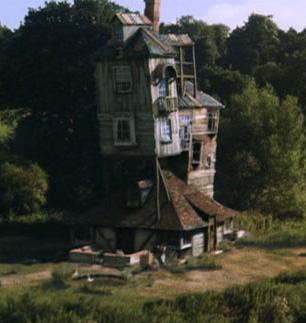
So, anyway, that's the latest writing analogy I employ to help me sleep at night. I am a hard-working author, committed to making this book work, but at some point I have to step back and say DONE. I have to stop tinkering and wait for the buyer (who--surprise!--loves the house and wants to own it in the worst way) to tell me what finishing touches I need to add to make it a perfect fit.
Monday, February 20, 2012
What does success look like to you?

I have a good friend who has recently hit a publishing wall. She's a great writer, with a published book that was nominated for a major award. Her writing inspires me. Now she has a second book out on submission and the process is killing her confidence in the unique way that only the publishing industry can. What she describes feeling is common among writers, even the successful ones. We all simultaneously think we're something really special...and nothing at all. It doesn't make sense, but that seems to be the way of the creative mind.
If you are a writer, here's what I think you need to spend at least a little bit of time thinking about: What does "success" look like to you? I'm talking about in your heart-of-hearts, what does success look like? When you have that warm vision of you as a successful writer, where are you? What are you doing? In my daydream of success, I'm standing at a lectern, reading and answering questions and I have a large audience. So, that's "success" for me, it turns out, and that tells me that I am more interested in reaching people, in having an audience, and connecting with readers. Now for another writer, he might envision success as walking on stage and accepting a big award, or getting an excellent critical review of his work, or making the canon. Another writer might just see success as being able to find the time to write, alone, for long stretches. If you know what success looks like to you subconsciously, you can make changes in your work to push it in that direction.
You have limitations, you say? All writers have limitations, even the great ones. And most creative people are working through the same themes for the bulk of their lives. I just read John Irving's most recent book, and thirty-plus years later he is still rehashing the same themes--absent women, dastardly dogs, death of a child, and oral sex (usually taking place in a car) that goes horribly wrong. Every one of his books seems to have one or more of these issues creep in--but he's JOHN IRVING...and he's a writer with limitations.
When the negative responses start to come in, we can parse them for similarities. Do any of the publisher's responses ring true in terms of specific criticisms? Are there common complaints that can be addressed before the next round of submissions? I'm always amazed by the ways that small adjustments can make a huge difference to readers. (And help the writer to feel proactive instead of reactive.)
Alternatively--and this is a scary question, but bear with me--could it be time for you to give up? Maybe it is time to ask that awful question. Asking is just asking, just admitting to a possibility. Why not give up and see how it feels? No one has to know but you. Just stop caring and tell yourself you are never going to write another fricking word again, ever. Not one. Then see how that feels. Freeing? Good. Go with it. It is guaranteed to take you somewhere. I've given up about five times in my writing career. I do it once every three years or so. I simply swear off the stupid writing. What a relief!! I don't ever have to write again. Thanks be to God. And yet somehow I always come back to it. It's how I process the world, so I can't seem to not write. And when I come back to it after sincerely swearing off the writing, I come back with renewed vigor and fresh eyes because I know I'm doing it by choice. I usually feel less pressure when I come back, because hey, I quit writing, so who cares what my next "thing" looks like?
And my final words of wisdom...chances are good that you are actually closer than you have ever been before. Look behind you at the long road you have already traveled and imagine yourself back there at the start of it all. Wouldn't where you are now look like success to that far away writer? Here is what I told my friend: You have an agent who believes in you. Your work is being sent out and landing on the desks of big NYC editors. It's getting READ!!! CONSIDERED!! It only takes one yes. You've done your part, let the agent do the hard work now. And maybe it's best if you tell her to hold onto the responses for a while. Ask her not to tell you what they are until she has a common complaint that you can address. You don't need to read and obsess over the nuance of every single rejection. Let her do that, let her absorb the blows for a while. She's got more distance. It isn't her baby in the same way it is yours. It sounds like it is self-defeating and counterproductive for you to be kept apprised of the responses as they come in. Plenty of writers tell their agents they don't want to know, they just want to write. You could try that with this next round of subs and see how that works for you.
And in the end, maybe the truest sign of success is simply being able to write and not worry about how it is (or will be) received. Maybe we all need to remember that the real joy is in the writing.
Wednesday, February 08, 2012
It's All About the Writing

Before I began writing full time, I was a production potter. I strove to create beautiful work that was also functional. For me, beauty and function have never been separate ideals. A pitcher that is easy to lift and pours a smooth stream of liquid without dripping is beautiful for how it becomes an extension of the hand, an aid to human intent and ability. Beauty, likewise, has its own unique function: to make us happy, to carry us beyond the mundane details of our daily lives, to engage our souls and help them briefly soar.
During my days as an MFA student studying creative writing, a beloved instructor gave me the following advice: "It's all about the writing." Focus on the writing, she said, and the rest will follow. She's a brilliant writer and a kind and generous soul, so I believed her. But I now believe that I took those words of hers too literally, as in, ONLY the writing is important. In today's publishing climate, this is not the case--if, in fact, it ever was.
I'm not only referring to the fact that agents and publishers want to know if you have 1) a "platform" (i.e. some claim to fame beyond the writing, preferably still related to the writing) from which they can help you to launch your writing, 2) if you have a blog, 3) how many Facebook friends you have, and 4) how many Twitter followers.
No, I think what I'm talking about is the fact that readers crave beautiful writing, yes, but they also want good, solid characterization, they want a functional story. And why shouldn't they? I want those things in my reading, too. Writing beautiful descriptive passages has never been a problem for me. I've got that pretty much nailed. But it isn't enough to keep a story hanging together. It isn't enough to fully transport the reader.
I'm a stubborn person. I know this about myself. For those of you who follow such things, I'm a Taurus, so yeah, bullheaded and all that. But I can be taught. I can learn. And what I have learned from my novel currently out on submission is that it is "beautifully written," and that I am a "wonderful writer"...and yet... somehow it isn't fully capturing the reader. It doesn't quite deliver that fictive world that readers want to inhabit for 200 pages.
Until now.
I've spent weeks revising with this in mind, that it isn't only about the writing. It is also about the character and what he/she wants more than anything in the world. It's about the experiences in life that brought her to this critical crossroads and inform the choices she makes, good or bad, from here on out. And it's about how she is changed, and by extension how the readers is changed, before the final page is turned.
I feel like I get it now. I finally, finally understand. And so I'm taking all that beautiful writing and making it just a little bit more functional. A little less likely to drip when poured. I can hardly wait to send it out and see.
Friday, January 13, 2012
Never Give Up

Cliff Garstang has a great post about keeping hope alive as a writer: Don't Give Up! Truly, mental fortitude in the writing business is as important as the writing itself, especially in the beginning. As Fred Leebron counseled us during our MFA program, "Writing is a game of attrition. Don't attrish."
I'm very pleased to announce that I have not attrished, and any plans for attrishment that were being hatched have been ferreted out and squashed. The writing is going well on all fronts. I only wish I had more hours in the day.
A bit of excellent news arrived in my inbox yesterday. I won the League of American Pen Women Mary Mackey Short Story Prize for my story Viewing Medusa. This story is part of the novel-in-stories that I'm working on, so that's doubly heartening. Also, that story has been sent out to over 100 magazines and journals without ever getting picked up (yes, I'm stubborn). It is also the story that helped secure me a Bread Loaf waitership and an SLS scholarship in a contest judged by Margaret Atwood. It's served me well, but no magazine has seen fit to publish it. Am I alone in finding that odd? Well, until one finally does, I guess I'll just keep using it to apply for as many good opportunities as I can. :)
Saturday, December 10, 2011
The (dreaded) Author Photo
Most of the readers I know, love to look at an author's photo. Most of the writers I know hate the idea of their picture being attached to their words. In that regard, I'm no exception. I mean, I write words, for heaven's sake--I'm not an actress. What does it matter what I look like? My writing should tell you everything you need to know about me. Please, keep my looks out of the equation.
Except I admit that I look at author photos, too. It's not necessarily the first thing I do as a reader, but I usually do it before I commit to buying the book, and then again (sometimes many times) while reading--the number of glances largely related to how I feel about what I'm reading. When I first read Wally Lamb's She's Come Undone in the 1990s, I kept returning to the author photo. I had so much trouble believing it had been written by a man. I looked and looked at his face, wondering, was he transgendered? Was he some sort of super-sensitive male creature? What makes this author tick?
 If a book is funny, you want to flip to the back and see a photo of someone who looks like there's an amusing anecdote just waiting to fall from her lips (calling Erma Bombeck!). If it's a book about science, you want to see the scholarly author ready to expound on her topic of expertise. For One Life to Give, the non-fiction book I co-authored, with its inspirational/educational focus, we chose author photos that showed us looking trustworthy and understanding.
 As an author, I think it's difficult to know when it's time to update the(dreaded) author photo. I've been to plenty of readings where the author in question is a good twenty years older than his or her most recent official author photo. While I understand the impulse to present your best, youngest self, that older picture isn't really a picture of you anymore. So I've decided that every ten years is a good benchmark to shoot for. And this fall, when I still had a smidge of my summer tan and backpacker's fitness left, I decided it was time. I bought tooth whitener. I got a really good haircut. I bought two new shirts. I actually got excited about getting my picture taken, convinced that I could be happy with the results. (Apparently I had forgotten how seldom I see of a photograph of myself that I actually like.)
Oddly enough, I found that my previous author photo often caused readers to exclaim, "Oh, you look so much younger in person!" when they met me, which I found very strange. How often does that happen to an author?? And what was wrong with that photo? Was it the pose that made me look older? The outfit I was wearing? The use of a black-and-white image? What? Whatever it was, I knew that I wanted my updated author photo to go in the other direction this time.
 So I tried for a look that might be labeled "hip" if it weren't for, you know, the fact that it's a photo of a writer. (Apologies to all my hip writer friends out there, but surely you know you are in the minority.) I was pretty sure I wanted my photo taken outside. I write a lot about the natural world, and I am far more comfortable outdoors than I am cooped up inside. I thought I wanted a photo with my fins, which led to an option that I decided was fun, but not really author photo material.
 Then we shot some in color, against a rustic doorway, but they felt too smiley. What I had in mind was a photo that would depict me as serious but approachable, intelligent but fun. I understand that's a lot to ask of one image, but we kept trying. We even gave the studio shots a whirl in both black and white and color, using different backgrounds, wearing different clothes, striking different poses, looking in different directions. The photographer was very patient. In the end, I decided to go with the leather jacket image that I have made the "face" of this blog. Although I will happily take a publicist's advice when we get to that stage.I'm looking forward to it. :)
Except I admit that I look at author photos, too. It's not necessarily the first thing I do as a reader, but I usually do it before I commit to buying the book, and then again (sometimes many times) while reading--the number of glances largely related to how I feel about what I'm reading. When I first read Wally Lamb's She's Come Undone in the 1990s, I kept returning to the author photo. I had so much trouble believing it had been written by a man. I looked and looked at his face, wondering, was he transgendered? Was he some sort of super-sensitive male creature? What makes this author tick?
Reading my first Malcolm Gladwell book, Outliers, I was intrigued by his author photo, too, especially his splendiforous hair, which I know has nothing to do with what he writes, but his photo and the subject he wrote about felt oddly mismatched for me. Revisiting the author photo was evidence of my continued incredulity: "This guy wrote this?" (I've since reconciled the author image and the book's content.)
 If a book is funny, you want to flip to the back and see a photo of someone who looks like there's an amusing anecdote just waiting to fall from her lips (calling Erma Bombeck!). If it's a book about science, you want to see the scholarly author ready to expound on her topic of expertise. For One Life to Give, the non-fiction book I co-authored, with its inspirational/educational focus, we chose author photos that showed us looking trustworthy and understanding.
 As an author, I think it's difficult to know when it's time to update the(dreaded) author photo. I've been to plenty of readings where the author in question is a good twenty years older than his or her most recent official author photo. While I understand the impulse to present your best, youngest self, that older picture isn't really a picture of you anymore. So I've decided that every ten years is a good benchmark to shoot for. And this fall, when I still had a smidge of my summer tan and backpacker's fitness left, I decided it was time. I bought tooth whitener. I got a really good haircut. I bought two new shirts. I actually got excited about getting my picture taken, convinced that I could be happy with the results. (Apparently I had forgotten how seldom I see of a photograph of myself that I actually like.)
Oddly enough, I found that my previous author photo often caused readers to exclaim, "Oh, you look so much younger in person!" when they met me, which I found very strange. How often does that happen to an author?? And what was wrong with that photo? Was it the pose that made me look older? The outfit I was wearing? The use of a black-and-white image? What? Whatever it was, I knew that I wanted my updated author photo to go in the other direction this time.
 So I tried for a look that might be labeled "hip" if it weren't for, you know, the fact that it's a photo of a writer. (Apologies to all my hip writer friends out there, but surely you know you are in the minority.) I was pretty sure I wanted my photo taken outside. I write a lot about the natural world, and I am far more comfortable outdoors than I am cooped up inside. I thought I wanted a photo with my fins, which led to an option that I decided was fun, but not really author photo material.
 Then we shot some in color, against a rustic doorway, but they felt too smiley. What I had in mind was a photo that would depict me as serious but approachable, intelligent but fun. I understand that's a lot to ask of one image, but we kept trying. We even gave the studio shots a whirl in both black and white and color, using different backgrounds, wearing different clothes, striking different poses, looking in different directions. The photographer was very patient. In the end, I decided to go with the leather jacket image that I have made the "face" of this blog. Although I will happily take a publicist's advice when we get to that stage.I'm looking forward to it. :)
Thursday, October 13, 2011


Wednesday, September 28, 2011
Margaret Atwood at the r.kv.r.y. blog

I am a huge, slavering fan of Margaret Atwood's work. I first read The Handmaid's Tale in 1985, and it took the top of my head off. Thereafter, I read everything of hers I could get my hands on. The Double Voice, the poem she graciously permitted us to print in this issue, became a standout poem for me in those early years when I was grappling with what it meant to be a woman, and a creative woman at that.
I grew up spending a lot of time in the wilderness. Our first house in the Blue Ridge Mountains was located down a one-lane dirt road in a holler, a mile away from our nearest neighbor, with two creek crossings (no bridge--we just drove right through). In the winter, we kept our vehicles at the top of the hill and first walked up there to drive to town, then brought our groceries back down by toboggan, usually once a month. (We bought a lot of powdered milk and pinto beans.) I'm sure it was a difficult existence, especially for the adults, but it was a magical time for me. I've read that Margaret Atwood spent many months in the Canadian wilderness as a child, and I can't help but wonder if some of my affinity for her work is related to the similarities of our early experiences, although back then Canada seemed like a world away from Check, Virginia.
Our first winter in that house was the winter of 1976, an especially snow-heavy winter all over the east coast. I missed school the entire month of January because of the excessive snow. I also remember watching the news after the freak snowstorm in Buffalo that year that left people climbing out of their second-story windows to get out of their houses. I distinctly remember thinking, "Who in their right mind would ever live in such a place??" And here I am now, going on 11 years in Suchaplace, NY. A southern girl at heart, I now live so far north that parts of Canada are actually south of me. Oh, irony.
Anyway, this was meant to be a post about Margaret Atwood and her amazing work. I've heard her speak several times, once in Buffalo, once in Toronto for her clever, theatrical, and environmentally consciencious launch of Year of the Flood. For intellectual stimulation and wry wit, she never disappoints. In 2012, at the annual AWP conference in Chicago, she will be keynote speaker--a Do Not Miss event.
Here is a video link of her brilliant talk at a tech conference in which she discusses The Publishing Pie (featuring her own hand-drawn slides). I highly recommend this discussion of the role of authors in the changing publishing landscape. In response to popular demand, she made several of the slides into t-shirts, including the Dead Author t-shirt pictured below, that you can purchase at Cafe Press. Clearly she's an author not afraid to embrace new technology, and that alone would be enough of a reason for me to admire her.

And here is a fun video from one of my favorite shows, The Rick Mercer Report, in which she answers the question Poet first? Or novelist first? Surprise answer? Goalie!
Thursday, September 08, 2011
My Blanket Apology

I am counting down. I have given myself a timetable and my end date is September 15th. One week to go.
This is the date I have told myself I must be done. I've completed nine other revisions on this novel, but this last one is a biggie. New title, new ending, new character names, new motivations, more sex, and another death. I am almost there. But I still have one week to go. So...
No matter how much I love you, don't expect to hear from me. Unless you have the same number as the Hong Kong Buffet takeout place, I'm not likely to ring you up.
On the other hand, I may contact you if you know anything about boats or sharks or the Windward Isles or what it means to be a Belonger. Or even if your area of expertise is 70s punk or panic attacks or Mormonism or stalking.
If you call me, I am not likely to answer. If I do answer, expect me to sound confused, distant, and disoriented for the first five minutes of our conversation. (No, I have not been drinking...unless it's after ten pm and I'm writing a sex scene.) When you have been diving in very deep waters, it takes time to resurface, unless, of course, you don't mind if your head explodes.
If you email me and my answer is shorter and more to the point than my usual emails, understand: brevity is where I live. For the next week, I won't use two words where one will do.
If I seem testy, don't take it personally. It is only because I am spending my days looking for any spark of conflict and then cupping it in my hands and blowing on it.
To my friend who has recently had a baby, I'm sorry I haven't called. I've been up at night walking the floors with my own colicky manuscript.
To my neighbor, whose son just left for college, I'm thinking of you, I really am.
To my former sister-in-law who just lost her beloved uncle, I love you and I'm sorry for your pain.
To my children, my mother-in-law, my co-author, my best friend, my editors at the journal, my book club, my sisters, my mother, my poor neglected husband, my cat, my garden, and my yoga mat, I'm sorry I love you all. Please just allow me one more week of being here but being absent. Just seven more days, I promise.
Thursday, August 11, 2011
Interview with Dylan Landis

At the r.kv.r.y. blog.
Here's an excerpt:
MA: I've read that you feel one of your themes to be "the redemptive power of art." I love that. It makes so much sense to me, but I'm wondering if you could extrapolate on that for our readers.
DL: I'll say this inadequately, as neither a scholar nor an artist. I'm an ex-newspaper reporter who spent thirteen years getting her first book of fiction out.
Art requires so much discipline, and receptivity; and in return it connects you with humanity, and transcends what is mundane about humanity, too. This may sound crazy, but striving for all of that makes me feel forgiven, like I have a right to be here after all. Just the act of reading and writing, or answering your questions and looking up what Chekhov said about being cold, bonds me with other souls who care about story, books, language, a higher purpose. I need that. And I need to write about people who don't yet realize what it means to be touched by that.
Of course I may be producing absolute dreck while rereading Faulkner or Toni Morrison. But as long as I show up, I'm plugging into something larger and more vibrant than anything else I could probably manage to do.
So I wish that for my characters. I see art—and science too; think of Andrea Barrett's work—as a driving force for some of them, or as a real lack in their lives. Remember that art can be provocative, and artists troubled. The possibilities in fiction are intense.
Friday, July 15, 2011
The French cover!

I love this cover unreasonably. The title translates to "The grandfather and the calf. Lessons of life and hope." I love the title unreasonably, too. So thrilled at the job our French publisher did. C'est formidable. Merci beaucoup, Belfond!!
Thursday, July 14, 2011
Magnolia Journal!

Today I received my contributor copies for the inaugural print issue of Magnolia Journal. It's stunning, and I'm thrilled to have my work included.
Here's a bit from the back cover:
"In this first volume of a new series dedicated to socially engaged literature by women, guest editor Gayle Brandeis introduces us to powerful storytelling that speaks out loud the atrocities of our world, breaking the silence and taking pause. Included are the traumatic tale of a mother’s loss during a clandestine border crossing, the unionization of a women’s light bulb factory in pre-World War II Chicago, a child whose life has been stunted by a futuristic device she is stored in on a daily basis, and many more.
This year’s writers represent a diversity of geographies, stylistic sensibilities, and perspectives. Through poetry, fiction, and creative non-fiction, they universally challenge us to reconsider what “women’s experience” looks and sounds like—they require us to break our hearts, celebrate even the smallest triumphs, and to critically examine the seemingly mundane moments of everyday life, all through the medium of language. Featuring new and established voices, this collection is a must read for compassionate and thoughtful readers from all walks of life."
I'm especially happy to have found this fine home for my short story "Waste Island." It's speculative fiction, set in the future, on an island made from trash and located in the Sargasso Sea in the Atlantic gyre (aka the garbage patch). The narrator is a young woman caught in the web of an environmental cult with a leader whose good intentions lead them to tragedy (a la Jim Jones).
I won't have a chance to read the other work until next week, but I did a quick scan and it looks like a fabulous issue!
Here's a link to purchase it on Amazon: Clicky
Sunday, June 26, 2011
Freight Stories
Thrilled to learn that I have a new short story accepted for publication by the very cool Freight Stories! It's a somewhat unusual story, about a war between spongers in the Florida Keys at the start of the 1900s. I love the work Andrew Scott and Victoria Barrett are putting out and am really honored to have had my work chosen. (Plus, this is now the seventh short story from my new marine ecology collection to be picked up--all good!)
And speaking of short stories, I just finished reading Naked Summer by Andrew Scott (Press 53). Really an enjoyable read--I raced through it one sitting. Must go back now, and savor...
And speaking of short stories, I just finished reading Naked Summer by Andrew Scott (Press 53). Really an enjoyable read--I raced through it one sitting. Must go back now, and savor...
Thursday, May 26, 2011
Polish translation available!

We now have signed copies of RADYKALNA WDZIECZNOSC (the Polish translation of Radical Gratitude) available for sale!
Monday, February 21, 2011
Interview with Carolyn Kreiter-Foronda
There is an excellent--and I mean excellent!--interview now live at the r.kv.r.y. blog with a fascinating discussion about creativity and art as a conversation. Also, if you're interested in the art of Frida Kahlo and Diego Rivera, check it out. Carolyn is an amazing artist with such varied interests.

Dragon in Flight by Carolyn Kreiter-Foronda
Dragon in Flight by Carolyn Kreiter-Foronda
Saturday, January 01, 2011
Review of SERENA by Ron Rash

In the opening scene of Ron Rash’s excellent new novel Serena, George Pemberton, ruthless and land-hungry timber baron, returns by train to his holdings near Asheville, NC in 1929, with Serena, his wife of two days, in tow. There to meet them at the station are Rachel Harmon—a former camp employee who is carrying Pemberton’s unborn child—and her angry father, bent on revenge. At Serena’s urging, Pemberton quickly settles the score, leaving his opponent disemboweled, the young girl fatherless, and the witnesses at the depot speechless.
Upon returning to camp, the first thing Serena does to establish her own ruthless authority is to size up a nearby cane ash and make a public bet with the skeptical cutting-crew foreman as to the total board feet the tree will yield. Unfortunately for the foreman, he takes Serena’s bet. When the tree is cut and timbered and the results publicly revealed, his fateful bet loses him not only two weeks’ pay, but also his job—leaving no doubt among his fellow timber men as to who is in charge.
From that day forward, woe to any partners, employees, lawmen, or doctors who dare to desert, mislead, or challenge the rising Pemberton dynasty. Serena, as a sideline to her day job of overseeing the cutting and transport of timber, proceeds to import and tame a wild eagle, teaching it to hunt and destroy the area’s deadly timber rattlers, launching its aerial attacks from an imposing perch atop Serena’s forearm, while she sits astride her white Arabian stallion. When the eagle drops one of its victims, and a six-foot venomous snake falls from the sky, landing at the feet of the camp’s preacher, the man goes mad and is removed from his position, attracting unsavory interest and speculation from his fellow workers for months to follow.
The story of the Pembertons’ rise to power takes an even more violent turn when Serena—who wears jodhpurs and boots like a man—becomes pregnant, carries to term, then tragically loses the child, as well as her ability to conceive any future children; on the surface she copes, but underneath it all her vengeful and vindictive tendencies thrive.
When Serena’s quick tourniquet saves the life of a loner/worker whose hand is accidentally severed, she wins the blind loyalty of both him and his mantic mother, gaining a devoted henchman to do her diabolical bidding. Twenty-six months after the honeymoon train ride from Boston, Serena sets out to kill the child her husband fathered before they met. Her first foray into the surrounding hills fails to reveal the child’s whereabouts, but Serena manages to carry out her first longed-for murder: the innocent Widow Jenkins who had been caretaker of the boy. “We’ve both killed now,” Serena tells her husband urgently. “What you felt at the depot, I’ve felt, too. We’re closer, Pemberton, closer than we’ve ever been before.” And for the first time, we get a glimpse of the Lady Macbeth she has become, and the latent tendency that had been there all along. After her sinister pronouncement, her husband muses thusly:
“Madness, Pemberton thought, and remembered the first evening back in Boston, the walk down the cobbled streets to Serena’s lodging, the hollow sound of their footsteps. He remembered the moment he’d stood on the icy step as Serena unlocked the door and went inside, pressed the front room light on. Even when Serena had turned and smiled, Pemberton had lingered. Some dim troubling, almost visceral, keeping him there on the step, in the cold, outside the door. He remembered how he’d pulled off his gloves and stuffed them in his overcoat pocket, brushed some snow flurries off his shoulders as he delayed his entrance a few more moments. Then he’d stepped inside, stepping toward this room as well, into this moment.”
When her latest obsession reveals itself (“just us” she says, passionately kissing Pemberton before setting out under cover of darkness) her husband’s own desire to save the child who already bears such a striking resemblance to his father, initiates the slow unraveling of their marriage leading, ultimately and cataclysmically, to a conclusion so shocking that even though we sense it coming we think “no!” as we read—“no, surely not.” But readers can rest assured, under Ron Rash’s masterful pen and meticulous unfolding narrative, the dramatic conclusion is both thematically and cinematically right for the story. We arrive there breathless, incredulous, but strangely and supremely satisfied.
This is a finely crafted, beautifully rendered, and classically tragic tale of human ambition run amok. I have been a fan of Rash’s work for years, but this surely is his best, most artful novel yet.
Subscribe to:
Posts (Atom)