First, let me say that I've had plenty of amazing audiences and great experiences reading. This isn't about wallowing in the hard life of an author. I'm lucky, I know that. What I mean to do is share a few awkward reading stories in the spirit of fun. So here's a recap of five of the more nightmarish ones, in no particular order:
1) The readings I gave with Bronchitis (in Texas) are right up there...I'll lump them all together because the whole week was a blur, anyway. I was away from home, sick, and expected to socialize after it took everything I had to read without coughing, to force my battered voice to be loud (again!) without a microphone. That was also when I got viral induced asthma that made me think I was dying. Generally a whole big barrel of laughs.
2) The reading at a small feminist bookstore was sort of fun in an awful way--with all of two people in attendance and the Madonna of lesbian porn looking over my shoulder as I read.
3) There was that reading at a Polish conference where...well...not to overshare, but Aunt Flo made an unexpected visit and I had NOTHING in my purse, and so I'm desperately feeding quarters into a broken down machine that turned out to be empty, (while a line forms outside the door), and I'm wearing the absolutely wrong undergarments for this whole enterprise anyway...and well, that one was nightmare #3.
4) The reading to the "writers group" that told me only after I'd said yes that they meet at a Waffle House in Buffalo and so I had something like fried liver and onions and sat beside the only "published author" who had written and self-published the story of his mother's cat (or some such) and we read while the waitresses all cleaned up around us, clanking dishes and walking in between us as we read, and not one person bought a book but everyone was crazy talking endlessly about themselves and their projects and standing too close while talking earnestly and rapidly, even talking while following me out to my car.
5) But today may have taken the cake. (Here's a quirky preamble: I decided to run a quick mile on the treadmill before getting ready--take the edge off my nerves. As I'm running, I entertain this morbid fantasy about tripping and knocking my front teeth out and then giving a toothless reading. Haha, right?) So, I shower and try on ten different outfits before I settle on the right one, change shoes (and socks) four times, print out directions, and then go, narrowly missing a collision when Humboldt Parkway--on which I need to turn--is UNMARKED and I dash across two lanes of traffic to get there (sorry white Corolla). The reading is for a group of Western, NY Food Bank folks, and is to take place after lunch (served by them). Always careful about what I eat immediately before giving a reading, I take a bit of salad and a tuna salad croissant. That seems safe. As I'm eating the salad, though, I crunch down on a rock (or something) and get the heebie-jeebies (I'm really fond of my whole, healthy teeth), but everything seems okay, so I take the rock out (which is oddly white and shiny) and set it on my plate and keep eating. Then I take a nice cold drink of Sprite and HOLY CRAP! That was no rock, that was what was left of my tooth and now I have this bizarre, jagged hole that my tongue keeps finding and obsessing over and this Buddhist monk is talking to me very intently about something and I can't hear a word he's saying because my brain is screaming TOOTHTOOTHTOOTHohmygodTOOTH and I have to go on in less than five minutes. So I excuse myself and go the bathroom and check the mirror (sigh) and quickly call my husband to see if he can get me an appointment at the dentist for tomorrow morning, and then I perform with this half-tooth distracting me with its sharp edges and aching pain and I'm certain I'm now lisping and every time I take a big deep breath at the end of a paragraph, yowza! I muddled through it, but I was not at my best and really just wanted to curl up in the corner and cry for my poor little lost tooth. (I still have it in my pocket. It's so pretty.)
The things we do because the show must go on...So...come on. Someone must have something bigger and more horrendous to cheer me up with...please?
Thursday, March 18, 2010


Friday, March 05, 2010
Margaret Atwood Speaks in Buffalo
Okay, so I'll just start by admitting that I'm a rabid fan and apologize in advance for my slavering and blathering...
From the start, when the divine Ms. Atwood came on stage, it was clear that she would be sharp and charming and self-deprecating. She talked about how Buffalo, when she was growing up in Toronto, was called "Sin City" because you could see girly shows and drink alcohol at a younger age than you could in Canada (it's the other way around now). She joked about the Canadian slogan for the Olympics: "Own the Podium." Said it wasn't very Canadian at all. More Canadian would have been, "A little podium would be nice" or "I wouldn't say no to a bit of podium, eh?" She said she was reminded of the old joke, "What does a Canadian woman say when asked if she would like some sex?" Answer: "Only if you're having some yourself."
Her format for the lecture was to tell us the most frequently asked questions she has gotten from audiences over the years and then answer them. Here are a few:
1) Is your hair naturally like that (very curly!) or do you have it done that way?
She said a lot of things in response to that, but the most memorable was, "If I were having it done, do you honestly think I would have them do this?"
2) Why have you denied that The Handmaid's Tale and your other futurist stories are Science Fiction? And are you disparaging Science Fiction when you say this? Oh, and by the way, did you like the movie Avatar?
Yes, she liked Avatar. And she said that she refers to those futurist works of hers as "Speculative Fiction" because they involve humans, they happen in this world (on earth), and they involve technology that we are currently working to perfect or that is possible in the future, given what we know today. Most sci-fi takes place on alternate worlds with creatures very different from ourselves. She said if forced, she could put everything under a Sci-Fi umbrella with three main ribs: Fantasy, the type of writing that often involves dragons and unicorns and swords; Science Fiction that might involve frog-men from Mars, or giant blue-ish hued people with very strange tails; and Speculative Fiction that often involves a future-world that is within our grasp and imagination.
(This was all very useful to me, as the near-future dystopia that I'm writing would fit the Speculative Fiction label. I plan to use that in my future query letter.)
3) Do you like men? And the related, do men like you?
She said yes, she likes men, and as for the other question, why not ask the men? Although she knows that some of the younger ones claim to like her, just so they can get into the good graces of the young women they are interested in.
4) Are you a pessimist?
I loved her answer here. She said that no writer could ever accurately be termed a pessimist. The very act of writing is a supreme example of being hopeful. The road is so long and the horizon so far away when you first begin (you must write and revise the book, then find an agent, then find a publisher, then hope that it sells, then hope that readers and reviewers will like it...). Every writer is full of hope.
And she went on to more specifics of her hopefulness, but that first answer was the bomb.
And there were more, but I'll move on to some of the other bits that interested me.
She said never let anyone tell you that the arts are unnecessary. They are as important to human growth as breathing. To illustrate that point, she asked us to think about the creative things that kids do on their own before they ever start to attend school: they acquire language, dance, sing, draw, and color. (Brilliant.)
When asked who she reads, she said some of her favorites are Alice Munro and Hilary Mantel, and she recently read two forthcoming books by Yann Martel and E. O. Wilson in galley form. She liked them both.
When asked which one of her characters she was most like, she said Zenia, the compulsive liar (storyteller) from The Robber Bride.
When asked about the future of paper books vs. e-readers, she said that e-readers are lovely for some things, travel for instance, and aging eyes since you can enlarge the print and brighten the background, but that she doesn't believe that books will ever go away completely because the inherent storage risks are too great. Relying on a power source, surviving being dropped...in such ways books will always be superior. To illustrate this point she said, "Let me ask you this. Would you keep the only copy of your will on a computer?"
And lastly, when asked for a tip on sparking inspiration, she said, "I have the perfect way to inspire you to write. I promise it will work every time. It's foolproof. Are you listening? All right. First, put your right hand (or whichever hand you write with) onto your desk, on a piece of paper. Next, lift your left hand into the air. And now, hold your arm up in the air until you are inspired to write. Trust me, it works every time."
From the start, when the divine Ms. Atwood came on stage, it was clear that she would be sharp and charming and self-deprecating. She talked about how Buffalo, when she was growing up in Toronto, was called "Sin City" because you could see girly shows and drink alcohol at a younger age than you could in Canada (it's the other way around now). She joked about the Canadian slogan for the Olympics: "Own the Podium." Said it wasn't very Canadian at all. More Canadian would have been, "A little podium would be nice" or "I wouldn't say no to a bit of podium, eh?" She said she was reminded of the old joke, "What does a Canadian woman say when asked if she would like some sex?" Answer: "Only if you're having some yourself."
Her format for the lecture was to tell us the most frequently asked questions she has gotten from audiences over the years and then answer them. Here are a few:
1) Is your hair naturally like that (very curly!) or do you have it done that way?
She said a lot of things in response to that, but the most memorable was, "If I were having it done, do you honestly think I would have them do this?"
2) Why have you denied that The Handmaid's Tale and your other futurist stories are Science Fiction? And are you disparaging Science Fiction when you say this? Oh, and by the way, did you like the movie Avatar?
Yes, she liked Avatar. And she said that she refers to those futurist works of hers as "Speculative Fiction" because they involve humans, they happen in this world (on earth), and they involve technology that we are currently working to perfect or that is possible in the future, given what we know today. Most sci-fi takes place on alternate worlds with creatures very different from ourselves. She said if forced, she could put everything under a Sci-Fi umbrella with three main ribs: Fantasy, the type of writing that often involves dragons and unicorns and swords; Science Fiction that might involve frog-men from Mars, or giant blue-ish hued people with very strange tails; and Speculative Fiction that often involves a future-world that is within our grasp and imagination.
(This was all very useful to me, as the near-future dystopia that I'm writing would fit the Speculative Fiction label. I plan to use that in my future query letter.)
3) Do you like men? And the related, do men like you?
She said yes, she likes men, and as for the other question, why not ask the men? Although she knows that some of the younger ones claim to like her, just so they can get into the good graces of the young women they are interested in.
4) Are you a pessimist?
I loved her answer here. She said that no writer could ever accurately be termed a pessimist. The very act of writing is a supreme example of being hopeful. The road is so long and the horizon so far away when you first begin (you must write and revise the book, then find an agent, then find a publisher, then hope that it sells, then hope that readers and reviewers will like it...). Every writer is full of hope.
And she went on to more specifics of her hopefulness, but that first answer was the bomb.
And there were more, but I'll move on to some of the other bits that interested me.
She said never let anyone tell you that the arts are unnecessary. They are as important to human growth as breathing. To illustrate that point, she asked us to think about the creative things that kids do on their own before they ever start to attend school: they acquire language, dance, sing, draw, and color. (Brilliant.)
When asked who she reads, she said some of her favorites are Alice Munro and Hilary Mantel, and she recently read two forthcoming books by Yann Martel and E. O. Wilson in galley form. She liked them both.
When asked which one of her characters she was most like, she said Zenia, the compulsive liar (storyteller) from The Robber Bride.
When asked about the future of paper books vs. e-readers, she said that e-readers are lovely for some things, travel for instance, and aging eyes since you can enlarge the print and brighten the background, but that she doesn't believe that books will ever go away completely because the inherent storage risks are too great. Relying on a power source, surviving being dropped...in such ways books will always be superior. To illustrate this point she said, "Let me ask you this. Would you keep the only copy of your will on a computer?"
And lastly, when asked for a tip on sparking inspiration, she said, "I have the perfect way to inspire you to write. I promise it will work every time. It's foolproof. Are you listening? All right. First, put your right hand (or whichever hand you write with) onto your desk, on a piece of paper. Next, lift your left hand into the air. And now, hold your arm up in the air until you are inspired to write. Trust me, it works every time."
Wednesday, March 03, 2010
St George's Catholic Church
My co-author and I had a great event this past Sunday at St. George's Church in Buffalo. Our audience was delightful (an Over 55 group) and Andy kept joking that he was holding out for an "Over 75" group. They were attentive and receptive and bought all of the books we had brought with us. it was a lovely afternoon.
Coming up, two days at St. Joseph's Collegiate Academy next week, and the Buffalo Book Fair on March 27th. Should be fun!

Coming up, two days at St. Joseph's Collegiate Academy next week, and the Buffalo Book Fair on March 27th. Should be fun!
Tuesday, January 26, 2010
Laura Kasischke at Willow Springs

There's a great, short interview with Laura Kasischke over at Willow Springs. I so admire her work, and the way she elegantly and expertly crosses genres.
Clicky
Wednesday, January 13, 2010
Foreword Magazine
Foreword Magazine has given One Life to Give an excellent, generous review. Thank you, Foreword!!
One Life to Give review
One Life to Give review
Saturday, January 09, 2010
Mississippi Review Online
The current issue is all flash fiction, guest edited by Kim Chinquee. Some excellent work, and I'm proud to have my work rubbing elbows with all the talent in this issue.
Mississippi Review Online
Mississippi Review Online
Saturday, January 02, 2010
Review for One Life to Give
Thanks so much to Clifford Garstang over at Perpetual Folly for the kind review of One Life to Give!
Friday, December 18, 2009
Saturday, December 12, 2009
Storyglossia!!
Thrilled to have my short story "Bones of an Inland Sea" published in the December issue of Storyglossia just out!
Tuesday, December 01, 2009
We have a German cover!

The title translates to:
THE GIFT OF MY LIFE: How hard times can give us hope and strength
Friday, November 20, 2009
Rest In Peace, Tangie
 For a few years in the 1980s, Tangie and I were best friends. I can't even remember how we met, now. The high school marching band, perhaps? She was in the rifle corps and encouraged me to try out, too, after which we practiced together every day. She slept over at my house, I slept over at hers. We celebrated our sweet sixteen birthdays together.
 I remember a lot of things about staying over at Tangie's house. I remember how loudly her mother snored--I woke up terrified that some animal had gotten into the house and when I woke Tangie to tell her, she laughed and laughed at my silliness. One of her chores was to drive trash down the road to the greenboxes--at the age of fifteen--she was secure in her driving abilities before I had even dreamed of getting behind the wheel. I was awed. Then she was the first person my age to get a job. She worked at a local fast food drive-in in our small home town, then took that knowledge home, making perfect hamburgers by pressing ground meat into a circular form in the frying pan. Her matter-of-fact, real-life abilities amazed me.
Her circumstances had forced her to grow up quickly and she took on the responsibilities of an adult life just as quickly. She was married a few days after our high school graduation, with her first child born after nine months and her second a few years later. She was always the friend who pushed ahead with life, doing things first, being the first to grow up. And yet she didn't really grow up--not in the sense of being cynical and hardened. Something about Tangie always remained childlike, in the best sense of the word. She could summon such awe-filled wonder for the simplest pleasures in life. She could be so grateful for even the smallest kindness. She would do anything for a friend.
But there was a sadness to Tangie, a side she didn't like to show, but that was always there, just below the surface. Talk about someone else's suffering, or an animal that had been abused, or a child halfway around the world who didn't have enough food, and it would well up and spill over, right before your eyes. She had one of the softest, kindest hearts I'd ever known. She was forgiving to a fault.
She also suffered. A lot. It isn't always easy to see how we have made our own difficult circumstances, and for Tangie it was no different. The words I heard most during our marathon phone calls in high school and beyond were, "I just want to be happy." A simple, plaintive wish.
I just wanted her to be happy, too. Most of us did. She deserved to be happy. She gave so much.
But maybe she gave too much. Maybe she opened the door to too many strangers, took in too many strays, believed too many hard-luck stories, because the burdens she accepted from others weighed heavy on her soul. I believe this. And I never knew how to tell her not to take on so much sadness, to reject the sorrow and embrace the good. I didn't have the words to reach her, and for that I will always have my own tight burden of sorrow. I'm sorry, Tangie. I loved you, but I could not help you.
You are the friend who always dove in, headfirst, the one who paved the way...Even in this. Godspeed, my friend.
Tuesday, November 10, 2009
Thank you Oprah...
...for, among other things, defending the short story! She speaks about not always needing to have every story neatly tied up and that the mystery of "whatever happened to that character" is what makes it especially memorable. Amen!
Clicky (The part I love is right at the 3-minute mark.)
Clicky (The part I love is right at the 3-minute mark.)
Friday, October 23, 2009
The Maybe Dialogue, Final Installment
The last installment of the Maybe Dialogue between The Potomac Review and myself is now up. Thanks for reading.
Maybe Dialogue
Maybe Dialogue
Wednesday, October 21, 2009
Thursday, October 15, 2009
The Maybe Dialogue Begins
Over at the Potomac Review blog we've started a discussion about a story of mine that they read and felt was a "maybe." It's a great glimpse into the editorial process. Check it out!
Tuesday, October 06, 2009
Robert Boswell reads...
...from his marvelous short story collection The Heyday of the Insensitive Bastards over at Lively Words
Monday, September 21, 2009
Tuesday, September 08, 2009
Friday, September 04, 2009
Cliff Garstang and In an Uncharted Country
Cliff Garstang's debut collection of stories is on its way to all who preordered (me! Yay!) and his first official signing takes place tomorrow, in Staunton, VA.
There's a great write-up here.
There's a great write-up here.
Tuesday, September 01, 2009
The White Road turns one!
Check out Tania Hershman's blog and while you're there leave a comment to be registered to win a copy of her wonderful short story collection The White Road! Good luck!
Sunday, August 30, 2009
New Review for Women Up On Blocks
Can be read here at an interesting new blog devoted exclusively to book reviews.
Here's an excerpt:
"WOMEN UP ON BLOCKS--The title itself conjures a powerful image. Set aside the immediate mental flash of stirrups and invasive annual examination. Look at the cover art (good shoes) because in this case you can judge a book yada yada yada. Like meandering by the tv in lingerie during playoffs, red shoes and good legs propped along a dirty bumper ought to get you noticed."
Here's an excerpt:
"WOMEN UP ON BLOCKS--The title itself conjures a powerful image. Set aside the immediate mental flash of stirrups and invasive annual examination. Look at the cover art (good shoes) because in this case you can judge a book yada yada yada. Like meandering by the tv in lingerie during playoffs, red shoes and good legs propped along a dirty bumper ought to get you noticed."
Wednesday, August 26, 2009
Our new cover!

Our lovely new cover (and new title) for the NF book's US release has now been agreed upon! And you can even pre-order it at Amazon.
Tuesday, August 25, 2009
Bread Loaf Day #3
Saturday, August 15, 2009
I barely made it to breakfast. While the waiters were lifting up the hot trays of eggs I was grabbing frantically for a hard-boiled egg and some plain oatmeal before they whisked everything away. On the plus side, when I went to wolf down my food, I ended up sitting right across from Julie Barer, agent extraordinaire, and we had a lovely chat. She did a great job of selling my friend Ru’s gorgeous debut novel A Disobedient Girl. And no, I didn’t do anything to pitch my work. We’ve met before at Bread Loaf and spoken about my work. She’s seen my first collection (the now-published one) and passed on it a few years ago, subsequent queries have not interested her, so no need to push that on our quick social interaction. I think agents must get terribly tired of always being pitched. She would have asked if she were interested--this is Bread Loaf, after all, and she is here as a scout.
Rushed to the 9AM lecture then, and I’m glad I did. It was Patricia Hampl’s “You’re History or How to Get the Me out of Memoir.” It was an excellent lecture/reading and she’s quite funny and charming. We’ve been having moth troubles for speakers at the podium this year and she kept battling with a particularly pesky one, at one point saying, “I. Want. You. To. Die,” through gritted teeth. Then she cheerfully looked out at the audience and said, “When you go to a Catholic retreat, they give you bug repellent. A Zen retreat, no repellent. That’s why I’m Catholic.” The audience laughed. As the bugging continued, a woman from the audience came up and put a paper towel (or something) on Patricia’s shoulder and said, “It will keep the bugs away.” Patricia then looked out at the audience sort of helplessly and said in a small voice, “I don’t want it,” as she dragged it off her shoulder. “I’ve got a look I’m going for here…” she added. It was a funny moment, and not at the expense of the woman who had put that dingy paper towel on her shoulder. The whole reading gave you a real sense of her as a likable, generous person.
At 2:30, I attended Frances de Pontes Peebles’s craft workshop on The Benefits of Telling. It was a good class, with a nice, easy atmosphere of sharing information. I like seeing how different people teach.
The Fellow readers were Vicki Forman (NF), Leslie Harrison (Poetry) and Skip Horack (Fiction). I enjoyed them all.
Dinner was served outdoors, picnic-style, to give the waiters a little break in the action. The food was really good. Focaccia, some wonderful potato salad, pasta salad, fantastic barbecued pork (my one meat indulgence for the time of my visit), watermelon, and some really yummy chocolate chip cookies. I sat on the ground with two friends and had an amazing discussion on lots of different topics, mostly related to publishing, agents, book ideas, future goals, and more. They helped generate some great ideas for me with my next project. I love collaborating at the idea stage. I hated for it to end, but the bugs started biting and the next reading was coming up.
Lauren Groff (Fiction), Jennifer Grotz (Poetry), and Tom Sleigh (Poetry) all gave wonderful readings. Lauren read from her new collection Delicate, Edible Birds, Jennifer read some kick-ass poems, and Tom Sleigh is just generally clever and funny and great to listen to. But, I did note one thing about me as a listener...I love hearing poets read their work, but I wish I could read it at the same time, or maybe hear each poem read twice...or something. I feel like I miss a lot. And readings in general get a little overwhelming when you go to every single one. I don't know how Michael Collier does it.
Immediately after that reading, came the first of the Staff readings, and we heard from Nina McConigley (Fiction), Ted Thompson (Fiction), Avery Slater (Poetry), Greg Wrenn (Poetry), Zachary Watterson (Fiction), Gerald Maa (Poetry), Christian Anton Gerard (Poetry), and Ru Freeman (Fiction). I so enjoyed this reading, for the content, but also for the nostalgia of it. These are people who started out as terrified waiters (most of them) and have grown so amazingly. I had a real Bread Loaf moment, thinking of how proud I was of them, and how far we’ve all come…also remembering my own first time reading in the Little Theater and how absolutely breathtakingly terrified I was. “And now look at us” was sort of the sentiment I was feeling. Also immense gratitude for the opportunity. Such a place. I had tears in my eyes when I went up to hug the readers.
After the reading, we gathered for drinks and I had a few more lovely conversations that I can’t now quite recall, but whose warm glow lingers even without the details. :)
I barely made it to breakfast. While the waiters were lifting up the hot trays of eggs I was grabbing frantically for a hard-boiled egg and some plain oatmeal before they whisked everything away. On the plus side, when I went to wolf down my food, I ended up sitting right across from Julie Barer, agent extraordinaire, and we had a lovely chat. She did a great job of selling my friend Ru’s gorgeous debut novel A Disobedient Girl. And no, I didn’t do anything to pitch my work. We’ve met before at Bread Loaf and spoken about my work. She’s seen my first collection (the now-published one) and passed on it a few years ago, subsequent queries have not interested her, so no need to push that on our quick social interaction. I think agents must get terribly tired of always being pitched. She would have asked if she were interested--this is Bread Loaf, after all, and she is here as a scout.
Rushed to the 9AM lecture then, and I’m glad I did. It was Patricia Hampl’s “You’re History or How to Get the Me out of Memoir.” It was an excellent lecture/reading and she’s quite funny and charming. We’ve been having moth troubles for speakers at the podium this year and she kept battling with a particularly pesky one, at one point saying, “I. Want. You. To. Die,” through gritted teeth. Then she cheerfully looked out at the audience and said, “When you go to a Catholic retreat, they give you bug repellent. A Zen retreat, no repellent. That’s why I’m Catholic.” The audience laughed. As the bugging continued, a woman from the audience came up and put a paper towel (or something) on Patricia’s shoulder and said, “It will keep the bugs away.” Patricia then looked out at the audience sort of helplessly and said in a small voice, “I don’t want it,” as she dragged it off her shoulder. “I’ve got a look I’m going for here…” she added. It was a funny moment, and not at the expense of the woman who had put that dingy paper towel on her shoulder. The whole reading gave you a real sense of her as a likable, generous person.
At 2:30, I attended Frances de Pontes Peebles’s craft workshop on The Benefits of Telling. It was a good class, with a nice, easy atmosphere of sharing information. I like seeing how different people teach.
The Fellow readers were Vicki Forman (NF), Leslie Harrison (Poetry) and Skip Horack (Fiction). I enjoyed them all.
Dinner was served outdoors, picnic-style, to give the waiters a little break in the action. The food was really good. Focaccia, some wonderful potato salad, pasta salad, fantastic barbecued pork (my one meat indulgence for the time of my visit), watermelon, and some really yummy chocolate chip cookies. I sat on the ground with two friends and had an amazing discussion on lots of different topics, mostly related to publishing, agents, book ideas, future goals, and more. They helped generate some great ideas for me with my next project. I love collaborating at the idea stage. I hated for it to end, but the bugs started biting and the next reading was coming up.
Lauren Groff (Fiction), Jennifer Grotz (Poetry), and Tom Sleigh (Poetry) all gave wonderful readings. Lauren read from her new collection Delicate, Edible Birds, Jennifer read some kick-ass poems, and Tom Sleigh is just generally clever and funny and great to listen to. But, I did note one thing about me as a listener...I love hearing poets read their work, but I wish I could read it at the same time, or maybe hear each poem read twice...or something. I feel like I miss a lot. And readings in general get a little overwhelming when you go to every single one. I don't know how Michael Collier does it.
Immediately after that reading, came the first of the Staff readings, and we heard from Nina McConigley (Fiction), Ted Thompson (Fiction), Avery Slater (Poetry), Greg Wrenn (Poetry), Zachary Watterson (Fiction), Gerald Maa (Poetry), Christian Anton Gerard (Poetry), and Ru Freeman (Fiction). I so enjoyed this reading, for the content, but also for the nostalgia of it. These are people who started out as terrified waiters (most of them) and have grown so amazingly. I had a real Bread Loaf moment, thinking of how proud I was of them, and how far we’ve all come…also remembering my own first time reading in the Little Theater and how absolutely breathtakingly terrified I was. “And now look at us” was sort of the sentiment I was feeling. Also immense gratitude for the opportunity. Such a place. I had tears in my eyes when I went up to hug the readers.
After the reading, we gathered for drinks and I had a few more lovely conversations that I can’t now quite recall, but whose warm glow lingers even without the details. :)
Thursday, August 20, 2009
Bread Loaf, day 2 (for me)
Friday, August 14, 2009
The morning lecture was with Thomas Mallon, titled, “Epistler in Chief: Six Presidents in Their Letters.” He is such an engaging speaker, charming and funny and composed. I always love hearing him speak. And his topic was fascinating—presidential letters and diaries. Something that we (sadly) won’t have anymore because the concerns of subpoena and litigation are so real these days that presidents don't dare keep diaries or write personal letters.
Mallon started the lecture with a funny anecdote about revisions. Said he had already revised his title (to five presidents—to fit the time constraints) and cited a Mel Brooks gag where Moses arrives with a stack of three stone tablets and says, “The Fifteen Commandments!”—then shuffles his grip causing one tablet to fall to the ground and shatter—so he calls out, “The Ten Commandments!”
I loved the intimate glimpse into the lives of these great men from history. Oh, and the one thing that really stuck with me was when Mallon spoke about telegrams and their forced pithiness and quick delivery as being very much like the emails or even text messages of today. We tend to think that we’re the only generation to have this method of “instant delivery” and of “terse messages” meant to convey as much as possible in as few words as possible. That really woke me up in an “of course!” sort of way that will be useful when writing my historical novel.
Later, I attended a panel on publishing prose with Miriam Altschuler and Julie Barer (both agents), Fiona McCrae (Graywolf) and Judy Clain (Little Brown), both editors. It was interesting and enlightening, although also confirmed a lot of what I feel I already know about the publishing and agenting process. Much was said about how important a good agent is for an author both in terms of career and sales.
There were three Fellow readings in the afternoon. The readings were enjoyable, and also instructive—especially in terms of things I want to remember to do when I read (be personable, make eye contact, thank the host).
For dinner I had the veggie option: grilled veggies in a curried coconut milk sauce over basmati rice. A little spicy, but just the right amount, followed by a yummy dessert (squares of cake that had been cut into triangles, and half iced with chocolate, half with a caramel icing and then and reassembled into a square for a sort of yin-yang effect) and coffee. The waiters gave great service—really knew what they were doing and didn’t look nervous. Perhaps this means more aspiring writers these days are having to wait tables and so are experienced. Although, damn, I hate to even say “aspiring.” A bunch of the waiters this year have agents, and forthcoming books, and all sorts of awards under their belts. Holy cow the competition for those spots must be fierce. Really glad I got in under the wire. :)
The evening reading was Maud Casey and Ted Conover. Maud read from her new novel, an historical one, based on a real psychiatric patient from 1886—a man who walks and walks and walks and has various other problems, but mostly he just can’t stop walking. It sounds like a very interesting and entertaining book. And Ted Conover read non-fiction from his new book about Roads. That man is fearless in pursuit of material! I bought his book New Jack from the bookstore earlier in the day (a book that explores the prison system from the inside—he became a guard at Sing Sing to do research). I can’t wait to read it.
The second scholar reading was amazing. Wonderful stuff. From there, I went to the waiter party in the male waiters' quarters below the Barn (the Garage Mahal). Honestly, after a long day, I was done with NOISE and having to strain my voice to talk and my ears to hear, so I stayed for maybe ten minutes then left at midnight and walked back to my dark dorm, wiped off an Adirondack chair and sat in the dark, staring up at the amazing quantity of stars that one can see so far away from any city lights, and caught three or four meteors zipping across the sky (it’s the time of year that the Perseid meteors enter the atmosphere and burn up, sometimes as often as one every three minutes). Last night most of them were right over the handle of the big dipper, which itself seemed huge, immense, and close enough to touch.
Finally, I forced myself to go up to my room, opened and read the first few pages of Josh Weil’s first novella (from his book The New Valley) and then unable to keep my eyes open (no offense, Josh), turned out the light (it was very, very late), and slept.
The morning lecture was with Thomas Mallon, titled, “Epistler in Chief: Six Presidents in Their Letters.” He is such an engaging speaker, charming and funny and composed. I always love hearing him speak. And his topic was fascinating—presidential letters and diaries. Something that we (sadly) won’t have anymore because the concerns of subpoena and litigation are so real these days that presidents don't dare keep diaries or write personal letters.
Mallon started the lecture with a funny anecdote about revisions. Said he had already revised his title (to five presidents—to fit the time constraints) and cited a Mel Brooks gag where Moses arrives with a stack of three stone tablets and says, “The Fifteen Commandments!”—then shuffles his grip causing one tablet to fall to the ground and shatter—so he calls out, “The Ten Commandments!”
I loved the intimate glimpse into the lives of these great men from history. Oh, and the one thing that really stuck with me was when Mallon spoke about telegrams and their forced pithiness and quick delivery as being very much like the emails or even text messages of today. We tend to think that we’re the only generation to have this method of “instant delivery” and of “terse messages” meant to convey as much as possible in as few words as possible. That really woke me up in an “of course!” sort of way that will be useful when writing my historical novel.
Later, I attended a panel on publishing prose with Miriam Altschuler and Julie Barer (both agents), Fiona McCrae (Graywolf) and Judy Clain (Little Brown), both editors. It was interesting and enlightening, although also confirmed a lot of what I feel I already know about the publishing and agenting process. Much was said about how important a good agent is for an author both in terms of career and sales.
There were three Fellow readings in the afternoon. The readings were enjoyable, and also instructive—especially in terms of things I want to remember to do when I read (be personable, make eye contact, thank the host).
For dinner I had the veggie option: grilled veggies in a curried coconut milk sauce over basmati rice. A little spicy, but just the right amount, followed by a yummy dessert (squares of cake that had been cut into triangles, and half iced with chocolate, half with a caramel icing and then and reassembled into a square for a sort of yin-yang effect) and coffee. The waiters gave great service—really knew what they were doing and didn’t look nervous. Perhaps this means more aspiring writers these days are having to wait tables and so are experienced. Although, damn, I hate to even say “aspiring.” A bunch of the waiters this year have agents, and forthcoming books, and all sorts of awards under their belts. Holy cow the competition for those spots must be fierce. Really glad I got in under the wire. :)
The evening reading was Maud Casey and Ted Conover. Maud read from her new novel, an historical one, based on a real psychiatric patient from 1886—a man who walks and walks and walks and has various other problems, but mostly he just can’t stop walking. It sounds like a very interesting and entertaining book. And Ted Conover read non-fiction from his new book about Roads. That man is fearless in pursuit of material! I bought his book New Jack from the bookstore earlier in the day (a book that explores the prison system from the inside—he became a guard at Sing Sing to do research). I can’t wait to read it.
The second scholar reading was amazing. Wonderful stuff. From there, I went to the waiter party in the male waiters' quarters below the Barn (the Garage Mahal). Honestly, after a long day, I was done with NOISE and having to strain my voice to talk and my ears to hear, so I stayed for maybe ten minutes then left at midnight and walked back to my dark dorm, wiped off an Adirondack chair and sat in the dark, staring up at the amazing quantity of stars that one can see so far away from any city lights, and caught three or four meteors zipping across the sky (it’s the time of year that the Perseid meteors enter the atmosphere and burn up, sometimes as often as one every three minutes). Last night most of them were right over the handle of the big dipper, which itself seemed huge, immense, and close enough to touch.
Finally, I forced myself to go up to my room, opened and read the first few pages of Josh Weil’s first novella (from his book The New Valley) and then unable to keep my eyes open (no offense, Josh), turned out the light (it was very, very late), and slept.
Tuesday, August 18, 2009
In An Uncharted Country
My good friend Cliff Garstang's debut short story collection is now available for pre-order at Press 53 It's a wonderful book set in the fictional town of Rugglesville, VA and I highly recommend it!

Saturday, August 15, 2009
Bread Loaf!
Bread Loaf, August 13, 2009
Should I make a disclaimer here? That I adore Bread Loaf and maybe I’m not the most unbiased reporter of happenings from the Mountain? Nah. If you didn't know that about me already, you’ll figure it out soon enough. :)
This is my first time returning to Bread Loaf in three years and I’m honored to be back, and thrilled (if a little nervous) to be teaching a craft class during my visit. But I have to say, the first moment I topped the long hill of Rt 125 and spied those goldenrod colored houses, well, I got a little verklempt.
Then I stopped in at the office said hello to the very fine Noreen Cargill and her lovely back-office staffers Eva, Michelle, and Laura (van den Berg) and major hugs were in order. I was barely in time to catch the end of Lorri Moore’s reading (what I heard was excellent) and then all of C. K. Williams. I wasn’t familiar with his poetry, but I thought he gave a great reading and I’m going to look for his book in the bookstore. It was cool when he said he had been here when he was in his twenties, met Robert Frost, and was honored to be reading in the Little Theater.
After that was the welcome reception, with cocktails on Treman Lawn, where I couldn’t stop finding excellent friends to hug: Ru Freeman, Paul Austin, Sasha West, James Hall, Kirsten Menger-Anderson, Jim Ruland, Heidi Durrow, and more. It was amazing to be back in one of my very favorite places, seeing friends that I hadn’t seen for years. Ahhh, the community of writers, my tribe.
From there, we went to dinner (I had the grilled salmon with a yummy cilantro and tomatillo salsa on top. I could hardly remember to eat, though, so enamored I was to be meeting new friends (Mecca!) and virtual friends (Dolan!) and former fellow-staffers (Nina!) and generally catching up with all the others I haven’t seen nearly enough of over the years. It was like a grand family reunion.
After dinner, there was a kick-ass reading by Lynn Freed (no surprise) and Alan Shapiro (also no surprise). Lynn’s story (can’t remember the title of it or if she even told us the title) was one she said she wrote especially for an anthology. Of course she read impeccably in her lilting and lovely South African tinged voice. The story rocked my world and I’m still thinking about it. It was about a young girl found wild in the bush, possibly raised by baboons and how she is “tamed” for sinister purposes. I was hooked from the start, then repelled to find out her fate, and just at the point of I-can’t-take-it-any-more, she flipped our expectations and brought the story around to a shocking and satisfying conclusion. Masterful.
Alan Shapiro gave a great reading. His first set of poems were autobiographical, set in the mid-to-late sixties, an then he read a couple about his brother and sister both dying from brain cancer within a few years of one another. Then he finished with some of his trademark funny poems. He’s a great reader.
After that, I sat in on the History of Bread Loaf lecture given by David Bain. His talk included lots of old black-and-white photos (Truman Capote, Eudora Welty, Carson McCullers, Robert Frost, etc), and I had one of those walking-in-the-footsteps-of-greatness moments where I was thinking about all the talent that has passed through this place and how blessed and honored I feel to be part of the new history of Bread Loaf. Amazing.
The Scholar readings came after that, and can I just say that my friend Jim Ruland rocked the house? He was so composed at the microphone, told a perfect anecdote before reading, made the audience laugh and thereby primed them to listen even more intently. He came across as personable, poised, and articulate. What more could we wish for as authors? It was great to be in the audience cheering him on.
I was pretty thoroughly hosed after the long drive and thrill of being on the mountain, so I walked through the absolute dense darkness to my dorm, which is off of the main campus, and slept soundly.
(More on day 2 soon)
Should I make a disclaimer here? That I adore Bread Loaf and maybe I’m not the most unbiased reporter of happenings from the Mountain? Nah. If you didn't know that about me already, you’ll figure it out soon enough. :)
This is my first time returning to Bread Loaf in three years and I’m honored to be back, and thrilled (if a little nervous) to be teaching a craft class during my visit. But I have to say, the first moment I topped the long hill of Rt 125 and spied those goldenrod colored houses, well, I got a little verklempt.
Then I stopped in at the office said hello to the very fine Noreen Cargill and her lovely back-office staffers Eva, Michelle, and Laura (van den Berg) and major hugs were in order. I was barely in time to catch the end of Lorri Moore’s reading (what I heard was excellent) and then all of C. K. Williams. I wasn’t familiar with his poetry, but I thought he gave a great reading and I’m going to look for his book in the bookstore. It was cool when he said he had been here when he was in his twenties, met Robert Frost, and was honored to be reading in the Little Theater.
After that was the welcome reception, with cocktails on Treman Lawn, where I couldn’t stop finding excellent friends to hug: Ru Freeman, Paul Austin, Sasha West, James Hall, Kirsten Menger-Anderson, Jim Ruland, Heidi Durrow, and more. It was amazing to be back in one of my very favorite places, seeing friends that I hadn’t seen for years. Ahhh, the community of writers, my tribe.
From there, we went to dinner (I had the grilled salmon with a yummy cilantro and tomatillo salsa on top. I could hardly remember to eat, though, so enamored I was to be meeting new friends (Mecca!) and virtual friends (Dolan!) and former fellow-staffers (Nina!) and generally catching up with all the others I haven’t seen nearly enough of over the years. It was like a grand family reunion.
After dinner, there was a kick-ass reading by Lynn Freed (no surprise) and Alan Shapiro (also no surprise). Lynn’s story (can’t remember the title of it or if she even told us the title) was one she said she wrote especially for an anthology. Of course she read impeccably in her lilting and lovely South African tinged voice. The story rocked my world and I’m still thinking about it. It was about a young girl found wild in the bush, possibly raised by baboons and how she is “tamed” for sinister purposes. I was hooked from the start, then repelled to find out her fate, and just at the point of I-can’t-take-it-any-more, she flipped our expectations and brought the story around to a shocking and satisfying conclusion. Masterful.
Alan Shapiro gave a great reading. His first set of poems were autobiographical, set in the mid-to-late sixties, an then he read a couple about his brother and sister both dying from brain cancer within a few years of one another. Then he finished with some of his trademark funny poems. He’s a great reader.
After that, I sat in on the History of Bread Loaf lecture given by David Bain. His talk included lots of old black-and-white photos (Truman Capote, Eudora Welty, Carson McCullers, Robert Frost, etc), and I had one of those walking-in-the-footsteps-of-greatness moments where I was thinking about all the talent that has passed through this place and how blessed and honored I feel to be part of the new history of Bread Loaf. Amazing.
The Scholar readings came after that, and can I just say that my friend Jim Ruland rocked the house? He was so composed at the microphone, told a perfect anecdote before reading, made the audience laugh and thereby primed them to listen even more intently. He came across as personable, poised, and articulate. What more could we wish for as authors? It was great to be in the audience cheering him on.
I was pretty thoroughly hosed after the long drive and thrill of being on the mountain, so I walked through the absolute dense darkness to my dorm, which is off of the main campus, and slept soundly.
(More on day 2 soon)
Thursday, July 30, 2009
Reading in Floyd
1.jpg)
Well, my reading at Floyd was fantastic. The library helped to publicize the event, provided refreshments, and had already set up the room when we got there a half-hour early. Very organized, they were. We had about 30 people attend (my mom did a lot of advance promotion, god bless her), which wasn't bad considering it was Floyd Fest weekend. I read my two shortest stories, then answered questions, then signed books. I got to hang with some great peeps from my high school years (see photo), and so many wonderful surprise guests, too. Two of my HS English teachers came (Clara Martin and Joyce Hall)! Clara brought copies of the school magazine from 1982 and 1983 that had work of mine in it! What a gift--she had to dig around in her basement in boxes to find those and bring them to me. I was thrilled and very touched. So many people I hadn't seen in years showed up--really just to support me. It was truly a wonderful afternoon. A big thank you to all who attended.
Wednesday, July 22, 2009
Almost heaven, Floyd, Virginia
I leave tomorrow, to head to my favorite spot on the planet. I'll be at Floyd Fest on Friday, reading at the Floyd Library on Saturday (please come by at 2PM if you're in the area!), catching up with old friends, and soaking up enough Floyd vibes to last until my next visit, which can't come soon enough.
In the meantime, I've been meaning to mention that you can friend me on Facebook and follow me on Twitter--neither of which I will be doing much with over the next few weeks (after Floyd, I'll be on my glorious annual backpacking trip with my hubby), but you can follow just the same. :)
Oh, and will be doing a live interview on Blog Talk Radio's Garden of the Soul at 1PM today (6PM UK time) with my co-author about our book The Greatest Gift. Tune in if you get the chance!
In the meantime, I've been meaning to mention that you can friend me on Facebook and follow me on Twitter--neither of which I will be doing much with over the next few weeks (after Floyd, I'll be on my glorious annual backpacking trip with my hubby), but you can follow just the same. :)
Oh, and will be doing a live interview on Blog Talk Radio's Garden of the Soul at 1PM today (6PM UK time) with my co-author about our book The Greatest Gift. Tune in if you get the chance!
Friday, July 17, 2009
Blast from the Past, courtesy of the world wide web
I was just following a link to a post about writing and clicked on a blog with this picture:

And I knew it, instantly and instinctively. It's a closeup shot of the inside of the Bookbindery in Colonial Williamsburg. I am absolutely certain of it in the most visceral of ways. (I worked there as an historical interpreter for four years, so I wielded some of those tools, sat at that worktable, drank from that mug, stared out that window. I also worked as a potter at Historic Jamestown which made the salt-glazed stoneware in the photo, so if I didn't drink out of that mug, I might have made it.) It was a little freaky and startling to come upon that mini-tableau, out of the blue, after so many years of not thinking about that time in my life.
Do you have a story about stumbling across something on the web that gave you pause or resurfaced a memory?
And I knew it, instantly and instinctively. It's a closeup shot of the inside of the Bookbindery in Colonial Williamsburg. I am absolutely certain of it in the most visceral of ways. (I worked there as an historical interpreter for four years, so I wielded some of those tools, sat at that worktable, drank from that mug, stared out that window. I also worked as a potter at Historic Jamestown which made the salt-glazed stoneware in the photo, so if I didn't drink out of that mug, I might have made it.) It was a little freaky and startling to come upon that mini-tableau, out of the blue, after so many years of not thinking about that time in my life.
Do you have a story about stumbling across something on the web that gave you pause or resurfaced a memory?
Saturday, July 04, 2009
Thursday, July 02, 2009
The Short Review
I'm honored and thrilled to have my short story collection Women Up On Blocks reviewed at an excellent website devoted exclusively to the literary short form. The Short Review
Tuesday, June 30, 2009
Website
Okay, so I've been saying for years now that I need to get a professional website for my writing. I'm not a web designer by any stretch of the imagination, but I'm a big-time do-it-yourselfer. If I don't know how to do something, I want to learn. I read a bit about it, and then I dive in headfirst. That doesn't always provide me with the best results, but it does teach me a lot and keeps my mind fresh. If I go to a restaurant and like a dish, I go home and try to recreate it. If I get my hair cut and I hate it, I break out the scissors at home. If my clothing needs a nip or tuck to hang better, out come the needle and thread. I just like to do things myself and I like to have them done my way. My most common refrain is, "I bet I can do that." Don't know where such cheeky chutzpah comes from (I'm guessing from my father), but there it is.
And so, here is my newly created, still-evolving professional website thanks to a couple of looong sessions at GoDaddy.com.
And so, here is my newly created, still-evolving professional website thanks to a couple of looong sessions at GoDaddy.com.
Tuesday, June 23, 2009
Everything Matters!

Ron Currie Jr.'s new novel is about to be released and--lucky you--you can download and read the first chapter over at his website for free.
Friday, June 19, 2009
Sotto Voce
I am thrilled and honored to have my short story "Thunderstones" appear at Sotto Voce.
And at the end of the story, if you've liked it, you can vote to have it included in the annual print anthology. What a cool idea. Let the readers decide. :)
And at the end of the story, if you've liked it, you can vote to have it included in the annual print anthology. What a cool idea. Let the readers decide. :)
Monday, June 15, 2009
The Launch!!
No, not the space shuttle--Women Up On Blocks! It may be three months post-publication, but this was the official party to celebrate the launch of my short story collection.
 Signing books. There are bright red shoes you can't see, and matching bright red shoe earrings.
The launch started at 6PM. The signature drink--The Red Stiletto--had its own table and looked great: fancy martini glasses (long stemmed, with crooked, blue glass stems), a tub of ice with pitchers of red stilettos and my postcards with the recipe on them. It's a yummy and beautiful drink, garnished with a fresh red raspberry. Recipe here. (Scroll down the page.)
 I ended up reading at about 6:30, because we wanted there to be time for desserts and signing. It turned out to be a good decision. The door prizes were well-received. At least one woman yelled "whoo hoo!" and threw her arms in the air when her number was called. :)
 Then I read for about 20 minutes. People had to gather in, the chairs were filled, the stairs to the loft were packed with people sitting close together on them, the hearth had people sitting on it, and some were standing. Afterward, there were a number of excellent questions and comments. Desserts were lovely: cake squares, cheesecake, a lovely, fresh trifle, and a silver-tiered stand of various cookies. (I didn't see any of this for quite a while because I was signing books and talking to people.)
 Here's the location from the outside, the beautiful, historic Roycroft Campus in East Aurora, NY. A big thanks to Christine Peters, Martha Augate, and their amazing staff for hosting such a lovely event.
It was all over so quickly, I felt like Cinderella not wanting that midnight bell to chime. Wait! Everyone's leaving?? I'm just starting to enjoy myself!
It took a lot of work and planning, but it was worth every minute. Thanks to all those who attended. :)
 Signing books. There are bright red shoes you can't see, and matching bright red shoe earrings.
The launch started at 6PM. The signature drink--The Red Stiletto--had its own table and looked great: fancy martini glasses (long stemmed, with crooked, blue glass stems), a tub of ice with pitchers of red stilettos and my postcards with the recipe on them. It's a yummy and beautiful drink, garnished with a fresh red raspberry. Recipe here. (Scroll down the page.)
 I ended up reading at about 6:30, because we wanted there to be time for desserts and signing. It turned out to be a good decision. The door prizes were well-received. At least one woman yelled "whoo hoo!" and threw her arms in the air when her number was called. :)
 Then I read for about 20 minutes. People had to gather in, the chairs were filled, the stairs to the loft were packed with people sitting close together on them, the hearth had people sitting on it, and some were standing. Afterward, there were a number of excellent questions and comments. Desserts were lovely: cake squares, cheesecake, a lovely, fresh trifle, and a silver-tiered stand of various cookies. (I didn't see any of this for quite a while because I was signing books and talking to people.)Here's the location from the outside, the beautiful, historic Roycroft Campus in East Aurora, NY. A big thanks to Christine Peters, Martha Augate, and their amazing staff for hosting such a lovely event.
It was all over so quickly, I felt like Cinderella not wanting that midnight bell to chime. Wait! Everyone's leaving?? I'm just starting to enjoy myself!
It took a lot of work and planning, but it was worth every minute. Thanks to all those who attended. :)
Tuesday, June 09, 2009
Oceana and Ted Danson
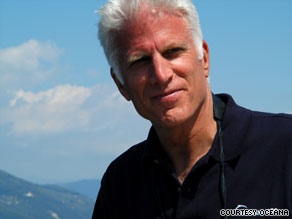
Oceana is working with Ted Danson to save the world's oceans. CNN reports on their collaboration for World Ocean Day. Full article here.
Saturday, June 06, 2009
Search for Downed Plane Highlights Ocean Trash Problem
The tragic disappearance of Air France's Flight 447 has highlighted another, ongoing tragedy: the terrible pollution in the world's oceans. It's awful that it took a disaster of this magnitude to bring this important issue to the world stage, but if something good can come out of such a terrible loss, I'm hoping this is it.
CNN Website
Here is an excerpt:
"The search for signs of the Air France flight highlights what environmentalists say is a pressing issue for the world today: We produce a lot of trash that biodegrades slowly, and too much of it ends up in the ocean. Out at sea, plastics suffocate sea turtles and choke birds, which look at the bits of floating gunk as food.
Endangered sea turtles become entangled in discarded fishing line and also ingest plastic bags, like those from grocery stores, said Bamford.
"They love to eat jellyfish, and when they see a plastic bag it looks exactly like a jellyfish, basically," she said.
Still, scientists say they know relatively little about the scope of the problem and the effects that trash has on ocean life.
Finding answers to those unknowns is among the current initiatives of the National Oceanic and Atmospheric Administration, said Holly Bamford, director of the U.S. agency's marine debris program.
Enough is known about ocean trash to know that it's time to act, she said.
"It's a global problem. You can go do a collection almost anywhere and you'll probably come up with a piece of debris in your sample. The question is what all is out there and what is it doing," she said. "It's something that needs to be addressed."
CNN Website
Here is an excerpt:
"The search for signs of the Air France flight highlights what environmentalists say is a pressing issue for the world today: We produce a lot of trash that biodegrades slowly, and too much of it ends up in the ocean. Out at sea, plastics suffocate sea turtles and choke birds, which look at the bits of floating gunk as food.
Endangered sea turtles become entangled in discarded fishing line and also ingest plastic bags, like those from grocery stores, said Bamford.
"They love to eat jellyfish, and when they see a plastic bag it looks exactly like a jellyfish, basically," she said.
Still, scientists say they know relatively little about the scope of the problem and the effects that trash has on ocean life.
Finding answers to those unknowns is among the current initiatives of the National Oceanic and Atmospheric Administration, said Holly Bamford, director of the U.S. agency's marine debris program.
Enough is known about ocean trash to know that it's time to act, she said.
"It's a global problem. You can go do a collection almost anywhere and you'll probably come up with a piece of debris in your sample. The question is what all is out there and what is it doing," she said. "It's something that needs to be addressed."
Friday, June 05, 2009
Jessica Handler's Notes from the Road

Mary has asked me to guest blog this week, and to talk a little bit about the evolution and execution of my book tour.
Let's start at Gate A 18, Hartsfield-Jackson International Airport, Atlanta; my hometown airport. I'm on my way to New York to participate in an author meet-and-greet to get my book Invisible Sisters: A Memoir considered for a series of book fairs. (Thanks to T. the Terrific Publicist, who got me hooked up with this event.)
My presentation will be timed, like speed dating. I've practiced the presentation with a stopwatch, tested it on friends, driven my patient husband a little crazy. I'm still not happy with my performance. Scrolling through my iPod while I wait to board, I discover that iPods have stopwatches.
I'll bet you already knew that.
This means I can practice on the plane. Quietly.
The playlist for when I wasn't timing and retiming myself?
In flight - Brian Eno 'Ambient.' (I was writing. I need lyrics-free music.)
In the terminal - David Lindley, 'El Rayo Ex.'.
As the April publication date for Invisible Sisters: A Memoir grew closer, I was told that, "The economy being what it is, and me being a new author--"
"Oh," I interrupted. "I understand." No big tour.
Truth is, I hadn't expected one--me being a new author and the economy being what it is...and when I signed the contract with my publisher, my agent advised me to put some money aside for travel. She was right. (She's always right. Seriously.)
T. the Publicist is great at getting my book into the hands of the press, to bookstores, to Websites, and to Book Festivals. But she wanted my suggestions about places where I can read and do author talks.
Places I can drive to.
Last month, M. and I drove to Asheville for an author talk at Malaprop's, about three hours away. We've always traveled well together, and road trips--what my sister Sarah called 'toad rips'-- become our together-time.
Asheville Playlist: Mofro, Johnny Cash, Jerry Lee Lewis, Sophie Madeleine,
John Lennon, Nichols and May.
Coming up? Winston-Salem. New playlist. New snacks. Call the cat sitter.
Soon? Ohio, Nashville, and more Atlanta events!
Am I tired? You bet. Am I happy? Heck, yeah. Do I know what day it is? Not always.
One of the best things about traveling to promote Invisible Sisters: A Memoir is reconnecting with friends and family all over the country, and making new friends, too. I've discovered how generous people can be. (They want to help you promote your book! They're readers and book lovers! They like to have dinner out!) S. has a big comfy couch and is walking distance to a great coffee shop. E. has a busy, multi-lingual household where I can nap mid-day and stay up late over dinner. J. knows a terrific tiny restaurant in her town that made room for twelve pals.
Friends bring friends to readings. Word of mouth sells books.
So here are my tips for your 'big book tour.'
Get enough sleep. Pack simple clothes. Take photos, draw, keep a journal.
Carry business cards or your book's postcards. Collect receipts for everything. Note your book-related mileage. Eavesdrop for fun. (The best eavesdropping so far? "The food's great at [redacted] but the feng shui is terrible!") Send postcards to your cat or dog at home. Ask friends to tell friends about your book. Buy something at the bookstores where you're reading, even if it's some note cards or a cup of coffee.
Send thank you notes.
Enjoy yourself.
Sunday, May 31, 2009
Interview with Jeffery Hess
 Today I have the pleasure of interviewing Jeffery Hess, editor of the newly released anthology Home of the Brave: Stories in Uniform.
Mary Akers - Welcome to my blog, Jeff. :) Thanks for taking the time to share a little bit about your project and the processes that brought it to publication. To start with, could you tell us about the book?
Jeffery Hess - Among these stories you’ll find shipbuilders and sailors, pilots, wild dogs, battles—-both physical and emotional--misunderstandings, fistfights, and the wounds of unrequited love. There are parades and hurricanes, people getting high and some merely getting by, as well as the human sacrifices made, the losses endured, the hardships faced because of or in spite of some connection to the military. Each story is different in the way it approaches the lives of these individuals at certain points of the modern era, but each entertained, and challenged, and stayed with me.
MA - How did the idea for this anthology come to you? Did you discuss it with anyone before taking on the project?
JH - I began a writing workshop for military veterans a few years ago with the vision of one day doing an anthology of the students' writing. While at AWP in NYC, I discussed this idea with Sheryl Monks, then co-publisher at Press 53. She later emailed to ask if I’d be interested in co-editing an anthology of military writing with Sally Drumm who runs a tremendous workshop for veterans and their families in South Carolina. Sally had a strong vision for her non-fiction anthology and asked Press 53 if they’d be open to the idea of doing two separate anthologies, one fiction, one non-fiction. They liked this idea and so I was off and running. Sally’s anthology, by the way, is “Milspeak: Stories of Warriors, Veterans, Family, and Friends Writing the Military Experience” and will be released by Press 53 on the 4th of July.
My only prior experience with anthologies was reading and submitting to them. I sought the advice of Pinckney Benedict, who urged me to, “Do it!” He was fresh off of editing the first Surreal South anthology and assured me that I was capable and that I’d enjoy the process. I can definitely attest to the enjoyment I got from putting together this book.
MA - How long did the process take from conception to publication?
JH - The initial online chat was in March 2008, but I was busy adjuncting and running the veteran’s workshop, so I took time off from formal teaching and spent a full year on it until publication in May 2009.
In the beginning--what I call the honeymoon phase--I spent a lot of time reading and assembling a stack of stories. I put out the word to writer friends that I was looking for stories on military themes. When a story I wanted appeared in a book I had, I contacted the publisher. By June and July, I began receiving first drafts. This process was the most rewarding because I filled the role of editor. I say this with a great deal of pride because some of these stories went though nine or ten drafts. This gave me an opportunity to do for other writers what I wish an editor would do for me (rather than simply acquiring). Ushering these stories into the world in this way was tremendously gratifying. I was also very gratified to share the stories with my writing workshop--using several stories as examples.
I continued working on sequential drafts of new stories and contacting agents and publishers for reprint rights on existing stories (and when I say stories, I also mean to imply novel chapters as exemplified by the pieces by James Salter and Robert O’Connor).
The complete draft was due to the publisher on December 31st. This date seemed reasonable and far-distant when I suggested it in March. I wanted to wrap it up in one calendar year. As the date approached, Kevin Watson offered me a two-week reprieve, but I declined, promising to have the manuscript to him on time. If a baby can be conceived and delivered in under nine months, then surely a collection of stories should be.
I spent January to April reading proofs, checking for typos and scanning issues. During this time, I also applied increasing pressure to a few of the less motivated rights holders.
MA - With so many wonderful military stories out there, I imagine you had to establish your own sort of "selection process" from the beginning. Can you tell us what your criteria were? And did that change at all as you began assembling the stories?
JH - My selection process began with a wish list of stories that always stood out in my mind, some of the heavy hitters featured in the book, as well as a few (including your excellent story) from the journals I subscribe to.
Once again, Pinckney Benedict, the patron saint of my writing career, was there for me. In our initial conversation, he offered his permission to reprint his story that appears in the book. My only criteria in considering any story was that it somehow related to the military and that it stayed with me long after I finished reading. As a reader and writer, I’m a strong proponent of the MFA concept of Resonance. As an editor, I demanded it.
As far as changes that occurred along the way, some of the writers who committed were unable to meet the deadline. In other cases, agents or publishers declined permission to reprint. And sadly, I had to reject a number of truly great stories.
MA - How did you decide on story order? I've ordered two of my own short story collections and found the decision to be a mixture of "gut" and "grab." What was your process like?
JH - I had no idea how this book would take shape until I started receiving the first drafts. With America’s vast military history, I had to limit the time period somehow. I figured that readers would be most familiar with and connected to the periods between World War II and the current conflicts.
As the stories came in, I considered first and foremost the era to which they most closely related. Your story, for example, is set in the modern day, but involves a Vietnam vet who has flashbacks during the traumas of a hurricane. Despite the date in which the story is set, I wanted to group it with stories that involved other Vietnam vets. The more I thought about it, the more it made sense to me.
The book begins with a story in the height of World War II and ends with someone going off to join the fight of the current conflicts. That was a great scope for me. A time capsule, of sorts, rather than a strict chronology.
MA - How much input did your publisher have in the shaping of this anthology? Did you enjoy working with Press 53?
JH - I began working on it in earnest in May. Then Sheryl Monks contacted me to say that she was leaving Press 53, and while I understood her reasons, I worried that the book would die on the vine, so to speak. I knew Sheryl from grad school and liked and trusted her, but I'd never met Kevin Watson. From the first time I spoke with him, though, it seemed like we were old friends. He assured me that he was behind this project and instinctively I trusted his word. He worked tirelessly on this book and has been there every step of the way. Plus, he’s designed the best cover I could imagine. I’ll never forget the first mock-up he sent me. I was blown away. He shrugged off my praise, but there’s no denying how thrilled I was.
Kevin was tremendously helpful in all aspects of this project. He even introduced me to a couple of amazing writers I was not familiar with, but who had really great stuff and interesting bios. We didn’t meet in person until the book’s launch a year after our initial online chat, but as he did on the phone so many months prior, he made me feel as if we’d always been friends. That’s a rare skill that I admire and appreciate.
I’m a big fan of small presses and the books they publish. I’m happy to be associated with a quality publisher like Press 53. Despite the challenges of not having a huge marketing budget or major bookstore chain presence, I think a book like this has tremendous word-of-mouth appeal.
MA - A portion of each sale of Home of the Brave will go to USA Cares. Could you give us a brief description of the kinds of work they do and why it's important to you?
JH - Donating a potion of the proceeds is something that I always wanted to do. When I set out, I didn’t have a charity in mind. I’d researched on the internet, vetting all my candidates on a site that lists operating budgets and rates their viability, etc. But one day, while listening to the Dennis Miller radio show, I heard a guest named Kim Moorman talking about USA Cares (a non-profit 501(c)3 organization). She spoke eloquently about the amazing things her organization does for post 9/11 veterans. Back to the computer I went, did a little digging, and was suitably impressed. I sent an email stating who I was and what I had in mind. The reply I received (from the very woman I’d heard on the radio) was more warm and welcoming than I could have imagined. Subsequent phone conversations revealed that both Kim and the organization's director, Bill Nelson, work tirelessly to assist post 9/11 veterans and support veterans of all eras. Good people doing good things. I was sold.
The money this charity raises helps save homes from foreclosure and provides needed funds that allow people who suffer from post traumatic stress disorder to receive the treatment they so desperately need. To date, they have saved over 500 homes from foreclosure and have provided money to cover wages lost during the three-month treatment for PTSD.
MA - You've mentioned your creative writing workshop for veterans. How has that experience affected you personally? How has it shaped your own writing?
JH - Personally, it's been rewarding because they’re all so appreciative of the opportunity to gather and discuss writing. If any of the people in my workshop are reading this, they’ll tell you that I don’t accept compliments or praise very well. It’s not about me. It’s about them. And I enjoy sharing what I’ve been so fortunate to learn over the years.
My writing has been shaped like the old cliché that says the best way to learn something is by teaching it. In grad school, we learn terms and concepts and think we know them by the time we print our theses. But when I began leading the workshop, I gained an appreciation for the difference between cognition and recognition. For the better part of a year, I often drew from some of the fine stories in this anthology as examples to illustrate the points I tried to make. Doing so cemented the knowledge both for them and for me.
MA – This book, your Navy service, and the workshop you lead prove your affinity for the military. Do you also write about the military in your own work?
JH – Absolutely, though sometimes only peripherally. I have a number of short stories with current or former sailors as protagonists, and the novel I’m revising is about a Gulf War Recon Marine who falls into a suicide pact with a damaged woman shortly after his fortieth birthday.
MA – Of the 24 stories in this book, which is your favorite?
JH – My wife asked me the same question. Unfortunately it’s one that I couldn’t answer then, nor can I now. Not because of diplomatic reasons (anyone who knows me can attest to the fact that I’m neither smart enough nor PC enough for true diplomacy), but rather because each story in the book is my favorite in a different way. That may sound like a glib response from a parent about his children, but it is the case.
In putting together this book, I was able to select from a “wish list” of stories that I’d read sometimes ten years earlier. I also had the good fortune of assisting writers with the creation of new material. In all cases, I reread each story many, many times which revealed nuances and drew me closer to the characters.
MA – You mentioned earlier that there were reprint rights that you were unable to obtain. Can you elaborate on that?
JH – Yes. There were a couple who shall remain unnamed here, but I will say that the disappointment I’d felt at the time has been supplanted by my happiness with the finished book as it appears.
Home of the Brave: Stories in Uniform is available from the book’s website and also from Press 53 as well as online from all major booksellers. Please also ask for it at a quality independent bookstore near you.
 About the editor: Jeffery Hess served six years in the U.S. Navy and holds a B.A. from the University of South Florida and an MFA from Queens University of Charlotte. He’s held writing positions at a major daily newspaper, a Fortune 500 company, and a university-based research center. In addition to corporate publications and websites, his writing has appeared in The Houston Literary Review, American Skating World, Writer’s Journal, and the Tampa Tribune. He lives in Florida where he’s completing a novel and leads a creative writing workshop for military veterans.
Thursday, May 28, 2009
Dominica!!
Dominica, my favorite island in the world, where I helped to found a marine ecology school has taken an amazing and brave step forward. For the first time in many years (ever?), Dominica has abstained from the vote to support commercial whaling in the Caribbean. Over the years, they have received a great deal of pressure along with many "gift-incentives" encouraging them to vote with Japan and support commercial whaling. To abstain is a huge big deal for them. Please consider sending a personal note to Prime Minister Skerrit to thank him. You can do that here.
EWN blogs about Home of the Brave: Stories in Uniform
Over at Emerging Writers Network, Dan Wickett talks about the new anthology (which I am proud to be in): Home of the Brave: Stories in Uniform. I'm just reading my contributor copy now and it seriously ROCKS.
Tuesday, May 19, 2009
Review of Ron Rash's "Serena"
Gently Read Literature has posted my review of Ron Rash's latest novel "Serena."
Five Star Literary Stories
I've got a new review up at Five Star Literary Stories. "Gods for Sale" was an excellent story (written by Patricia O'Donnell) and was a pleasure to read and review.
Sunday, May 10, 2009
Monday, May 04, 2009
Sylvia Earle
Delivers an excellent TED lecture about protecting the world's oceans. This woman has done so much to protect our ocean environment--love her. And I had the excellent good fortune to meet her in the 90s and even go on a night dive with her (and Hugh Downs) when 60 Minutes was filming on the Aquarius Undersea Habitat. Lucky me!
Saturday, May 02, 2009
Review for Women Up On Blocks
Katrina Denza offers a wonderful, generous review of Women Up On Blocks at her blog Illuminate, Ruminate, Create.
Monday, April 27, 2009
Who says high school reunions aren't fun?

You just have to have them in the woods, by a creek, with the coolest people in the world. Then they're fun.
Sunday, April 12, 2009
Review of Women Up On Blocks
I am thrilled to have a most excellent review (my first!) appear in the Winston-Salem Journal for my short story collection Women Up On Blocks. You can read it (pretty please?) here.
Yippee!!
Yippee!!
Spring? Not in the Adirondacks!


We enjoyed a wonderful eight-and-a-half mile hike today to the Boquet River. Cold, but wonderful.
Tuesday, March 31, 2009
The Painted Word by Tom Wolfe

The Painted Word is primarily a book about the rise of modern art—and art theory. (It also feels as if it’s a little bit about Tom Wolfe, too, but then, what book of his doesn’t feel that way?) Still, it’s an engaging read, filled with Wolfe’s studied observations and dripping with a detached bemusement toward the twisted subculture of art. Fortunately, The Painted Word is also filled with fascinating character sketches of the artists themselves. One of the most compelling—and oft repeated—arguments in the book is the notion that there are two key components necessary for the artist to attain lasting greatness: 1) The Boho Dance, in which the artist exhibits innovative work and struts his stuff amongst his peers all while showing utter disdain for the culture beyond the doors of his studio and 2) The Consummation, in which the culturati actually select the chosen artists to carry forth the standard of the movement-du-jour and the artist (albeit after some discreet hesitation) accepts the accolades and attention.
Wolfe argues that the artist who gets stuck in a crippling disdain for his audience, who cannot accept the offer to dance when it is made, is doomed to stagnation and will not be revered by history. Picasso, he argues, became Picasso, largely because he navigated the transition from one artistic stage to the other with ease. Perhaps, one is left to surmise, the secret to greatness lies not solely in talent, but in the ability to be gracious and accept the patron’s hand when proffered.
The only frustration for this reader—which may simply reflect my own ignorance of the book’s history—lay in having to wait until the end of the book to discover that I was reading a reissue of a book that was first published in 1975 (copyright page notwithstanding). As a result, no art or movement that has occurred since 1975 is mentioned. No discussion of the ways that the technological revolution will change the face of art history in the decades to come. No theorizing as to the Internet’s effects on broadening the horizons of the cloistered art scene. I kept hoping for that to be addressed, and was disappointed when it was not. Something as simple as Picador putting “Anniversary Edition” or “Heritage Printing” (or some other indicator of its age) on the cover would have saved me the pain of unrequited hope that turning that final page delivered. (Made worse by the fact that the “Epilogue”—hope, oh hope!—speaks about a time twenty-five years hence, in the year 2000. Oy! Give a poor reader some warning would you? An Epilogue, particularly if the edition is a new release and the writer is still alive, should not itself be 34 years out of date. At the very least, Picador should grant its readers this concession: Epilogue, 1975.)
Still the prose is sharp and lively and the vignettes featuring Pollock, Warhol, and Picasso and their benefactors are priceless. The clever chapter titles (would we expect any less from the man who penned The Kandy-Kolored Tangerine Flake Streamline Baby?) and Wolfe’s pen-and-ink drawings round out the entire package in an ironic art-meets-artist-meets-critic-meets-reader-meets-public sort of way.
Wednesday, March 11, 2009
Lynn Serafinn's Garden of the Soul

Lynn Serafinn's beautiful new book The Garden of the Soul: lessons from four flowers that unearth the self empowers readers to understand fully that all the answers to the questions of our hearts lie within the simple stories of our own lives.
Coming April 7th, 2009
Watch the book trailer below and hear Lynn describe in her own words her reasons for writing this inspiring and entertaining book and what she hopes readers will gain from the experience of reading it.
And remember:
"You are already the hero of your own life."
--Lynn Serafinn
Yesterday, March 11th, the virtual blog tour began with
Debra Shiveley Welch's book announcement on her blog.
Tomorrow, March 13th, the blog tour continues when Katherine Reschke interviews Lynn on her Blog Talk Radio show The Passion Project at 12pmET talking about mindset and discovering one's self. Don't miss it!
Wednesday, March 04, 2009
Secret Son!!
I can't wait to read this new book by my friend Laila Lalami. Watch the trailer, and then preorder the book! You won't be disappointed.
Monday, March 02, 2009
Our March 2nd Launch is here!!
And the new cover is gorgeous! Thank you, S&S. :)
The Greatest Gift at Simon & Schuster UK, official publisher's site


The Greatest Gift at Simon & Schuster UK, official publisher's site

Wednesday, February 18, 2009
Trailer for UK edition
Here's the trailer for the UK edition of our non-fiction book, The Greatest Gift. Kim McDougall of Blazing Trailers did such a fantastic job. I especially love the ending. Thank you, Kim!
Friday, February 06, 2009
Signing and Shipping

My boxes of books for the pre-order event arrived yesterday! What a thrill. Thank you to all who ordered. I'll be signing and shipping all day today. But first--priorities and all--I had to don the shoes and sit with the stacks.
Wednesday, February 04, 2009
We Women Globally
I am honored to be featured at We Women Globally today, a site which focuses on the achievements of women worldwide.
Monday, February 02, 2009
There's still time!
 There's still time for you to order WOMEN UP ON BLOCKS from Press 53. These are signed, first-edition copies that will be mailed out by mid-February. (If you want them signed to a specific person, just email my publisher kevin@press53.com and he'll make sure we "get 'er done" to your specifications.) And thank you!
Friday, January 23, 2009
Friday, January 09, 2009
Doctor Olaf van Schuler's Brain
Here's a great You Tube video of short performances from my friend Kirsten Menger-Anderson's newly released short story collection. I love this!
Tuesday, January 06, 2009
It's available!!
Signed copies of WOMEN UP ON BLOCKS are now available for pre-order at my publisher's website: Press 53. So excited!!
Saturday, December 06, 2008
My Short Story Collection
I'm thrilled to announce that Press 53 will be publishing my short story collection WOMEN UP ON BLOCKS in March of 2009. I'm so excited to be publishing with them--I love the work they've been putting out, and am thrilled to be added to their list. :)
Friday, November 21, 2008
College Hill Review
A new online quarterly review has just launched. The College Hill Review. It looks great and this first issue has an essay by a writer friend of mine, Clifford Garstang and an essay of mine.
Friday, October 24, 2008
The Greatest Gift
Here is the new trailer for the UK edition of our non-fiction book, The Greatest Gift. Kim McDougall of Blazing Trailers did such a fantastic job. I especially love the ending. Thank you, Kim!
Thursday, October 23, 2008
Jericho Brown
Check out the website and new book of poetry (PLEASE) by Jericho Brown. He's a friend, and a kick-ass writer, too.
Wednesday, October 08, 2008
New Trailer!
Kim McDougall at Blazing Trailers has made the most wonderful trailer for the Australian version of the NF book. I couldn't be happier!
Thursday, September 18, 2008
Our UK Cover!
Simon & Schuster has designed a wonderful new cover for our UK release. What do you think? (Click on the image to see it full-sized.)


Thursday, September 11, 2008

Friday, September 05, 2008
A fun article about ITME and me

Michele Deluca is a charming reporter and it was a delight to be interviewed by her. You can read the results here. (Photo by Dan Cappellazzo)
Tuesday, May 27, 2008
The Maternal Is Political
Today I received my contributor copies of the anthology The Maternal Is Political: Women Writers at the Intersection of Motherhood and Social Change. What a great looking book! And I am thrilled to have my essay appearing alongside the work of Barbara Kingsolver, Anne Lamott, Anna Quindlen, Nancy Pelosi, and Benazir Bhutto. Way cool. A huge thank you to editor Shari MacDonald Strong for putting together such an amazing anthology--and to my friend Linera Lucas for encouraging me to submit!

Sunday, May 25, 2008
Feeling the Book Club Love
Andy and I recently had our first book club experience and it was amazing!
The wonderful thing about book clubs is that they are most often held in private homes, with a small group of attentive readers, there's food and drink, and no need to "perform" as with a public reading. The meeting is held primarily to discuss the book with readers who have already read it, who are discriminating and intelligent and have interesting questions. We even sold nine additional books to members who already had their own copies and wanted to share the book with others.
It was so amazing to see this articulate group of interested readers sitting there with their books all marked and tabbed and highlighted. I think they remembered more about the book than I did. And several members had marked specific passages where a quote or a lesson or even just a simple observation had come to them at the perfect time to help them through some difficulty in their lives. What could be better? This is why I write. This makes all those long hours at the keyboard worthwhile.
I feel so grateful to readers, strangers who voluntarily give me approximately 8 hours of their lives, attending to words on the page--words that I've written. Then they take the words into their minds and hearts and make the book into an experience that speaks to them alone. They finish my book. Did I mention that it's amazing?
The wonderful thing about book clubs is that they are most often held in private homes, with a small group of attentive readers, there's food and drink, and no need to "perform" as with a public reading. The meeting is held primarily to discuss the book with readers who have already read it, who are discriminating and intelligent and have interesting questions. We even sold nine additional books to members who already had their own copies and wanted to share the book with others.
It was so amazing to see this articulate group of interested readers sitting there with their books all marked and tabbed and highlighted. I think they remembered more about the book than I did. And several members had marked specific passages where a quote or a lesson or even just a simple observation had come to them at the perfect time to help them through some difficulty in their lives. What could be better? This is why I write. This makes all those long hours at the keyboard worthwhile.
I feel so grateful to readers, strangers who voluntarily give me approximately 8 hours of their lives, attending to words on the page--words that I've written. Then they take the words into their minds and hearts and make the book into an experience that speaks to them alone. They finish my book. Did I mention that it's amazing?
Friday, May 02, 2008
Looking for a good story to read?
Check out the new website Five Star Stories that features new stories available on the web that have been nominated by the editor that published them (as the best of the issue) and are then critiqued by an established author. What a great idea! (I thought it was such a good idea, I volunteered to go first.)
Tuesday, April 22, 2008
Second Printing!
Good news! We've just heard that Radical Gratitude is going into its second printing tomorrow--whoo hoo!!
Thursday, April 17, 2008
Chimpanzee Release and Rescue
Encourage your federal legislators to support new legislation that will prohibit:
-Invasive research on great apes
-Federal funding of such research both within and outside of the U.S.
-Transport of great apes for such research
-Federal breeding of great apes for such research
And require:
-Permanent retirement of all federally-owned great apes
It's time, don't you think?
-Invasive research on great apes
-Federal funding of such research both within and outside of the U.S.
-Transport of great apes for such research
-Federal breeding of great apes for such research
And require:
-Permanent retirement of all federally-owned great apes
It's time, don't you think?
Wednesday, April 02, 2008
INTO THE SUNSET by Donald Capone
Wayne Benson is tired of living a complicated life. His needs are pretty simple—quiet time to write, three square meals a day (preferably prepaid and prepared for him), and comfortable surroundings. But where to find all of these things in one place? Enter The Sunset—a retirement community he once toured with his parents, prior to their move to Florida. The only problem? He’s thirty-two years too young. Enter Wayne Senior, his alter ego and aged doppelganger, courtesy of a grey wig and stage makeup, complete with cane and a stooped, halting gait (he’ll learn not to run for the bus when late).
For a time, Wayne’s plan works great. But what he hadn’t planned on was the complications of falling for a sexy fellow resident (yes, sixty can be sexy!) and becoming friends with his cranky next-door neighbor. Add a suspicious landlady and a blackmailing security guard, and things soon get way more complicated than Wayne’s former young life had ever been.
Perhaps the best part of the book for me (and so much of it was great fun) was moving through Wayne’s emotional maturation as he goes from viewing his fellow residents as obstacles to insightful, interesting people. His initial, skeptical view is evidenced by this passage:
“Eventually, the van would arrive in front of the supermarket and park. The driver would stay inside with the engine running and the A/C downgraded from arctic blast to cold front. Slowly the seniors would stir and with the help of a couple of Sunset staffers begin to vacate the vehicle. The legs of walkers and the tips of canes would emerge first, like the tentacles of some strange space creatures trying to blend in with humanity, they would descend on the store, sporting wraparound sunglasses, shawls, light-weight summer sweaters, and fistfuls of double coupons. Aisles would be congested, workers berated, and cashiers interrogated.”
Into the Sunset is a lively, engaging, romp-of-a-read, and by the end of the book, Wayne’s attitude and understanding have greatly softened—a truly older, wiser and more sanguine Wayne has emerged for us, his readers, and we welcome his rebirth into old age.

Amazon
For a time, Wayne’s plan works great. But what he hadn’t planned on was the complications of falling for a sexy fellow resident (yes, sixty can be sexy!) and becoming friends with his cranky next-door neighbor. Add a suspicious landlady and a blackmailing security guard, and things soon get way more complicated than Wayne’s former young life had ever been.
Perhaps the best part of the book for me (and so much of it was great fun) was moving through Wayne’s emotional maturation as he goes from viewing his fellow residents as obstacles to insightful, interesting people. His initial, skeptical view is evidenced by this passage:
“Eventually, the van would arrive in front of the supermarket and park. The driver would stay inside with the engine running and the A/C downgraded from arctic blast to cold front. Slowly the seniors would stir and with the help of a couple of Sunset staffers begin to vacate the vehicle. The legs of walkers and the tips of canes would emerge first, like the tentacles of some strange space creatures trying to blend in with humanity, they would descend on the store, sporting wraparound sunglasses, shawls, light-weight summer sweaters, and fistfuls of double coupons. Aisles would be congested, workers berated, and cashiers interrogated.”
Into the Sunset is a lively, engaging, romp-of-a-read, and by the end of the book, Wayne’s attitude and understanding have greatly softened—a truly older, wiser and more sanguine Wayne has emerged for us, his readers, and we welcome his rebirth into old age.
Amazon
Monday, March 17, 2008
Sunday, March 09, 2008


Sunday, February 24, 2008
Friday, February 15, 2008
Wednesday, February 06, 2008
The Money Factor
Kelly Spitzer gets feedback from a number of authors (including yours truly) over at her blog, Writers in Profile on the subject of submitting to paying vs. non-paying journals.
Monday, February 04, 2008
The Roycroft Campus Corporation
The RCC in East Aurora, NY has very graciously offered to host a luncheon and book launch for Radical Gratitude and other life lessons learned in Siberia.
The luncheon will be held at the Roycroft Inn on March 8th.
If you had asked me two years ago to dream big and tell you where I'd most like to celebrate a local book launch, I'd have answered, "At, the Roycroft, of course, as if that would ever happen..." Well, I can't believe it, but it's actually happening! Yay!!
And (by the way) if you'd ask me, nationally where I'd like to launch a US release of the book, I'd say, "Oprah, of course, as if that would ever happen..."
(Just putting that out there for the universe to mull over...)
The luncheon will be held at the Roycroft Inn on March 8th.
If you had asked me two years ago to dream big and tell you where I'd most like to celebrate a local book launch, I'd have answered, "At, the Roycroft, of course, as if that would ever happen..." Well, I can't believe it, but it's actually happening! Yay!!
And (by the way) if you'd ask me, nationally where I'd like to launch a US release of the book, I'd say, "Oprah, of course, as if that would ever happen..."
(Just putting that out there for the universe to mull over...)
Tuesday, January 29, 2008
The Liar's Diary
Today is the day that the blogosphere is celebrating and supporting and sending hope to Patry Francis, debut author of The Liar's Club. It's an amazing story--hers and her book's--and you simply must check it out at Susan Henderson's wonderful Lit Park.
Thursday, January 10, 2008
Wednesday, December 19, 2007
The Story of Stuff
If (like me) sustainability and consumerism have been on your mind lately, you simply must watch this video: The Story of Stuff.
Press release!!
 In the tradition of Tuesdays with Morrie, this is the inspirational story of how one man learned life's greatest lessons in the face of incredible hardship.
RADICAL GRATITUDE
and other life lessons learned in Siberia
Andrew Bienkowski & Mary Akers
Published by Allen & Unwin on 7 March 2008
No article or review should appear before this date without prior permission
RRP: $22.95 * Format: Paperback * ISBN: 9781741754223
Andrew Bienkowski was five when, exiled with his immediate family, he watched his grandfather starve to death so they could survive.
Reminiscent of Viktor Frankel's great classic, Man's Search for Meaning, this extraordinary book melds the unfolding story of survival against the odds with the practical wisdom 5-year-old Andrew gained while coming to terms with his new home; with its dramatic landscape and endless challenges. In amongst the pain are moments of great beauty, breathtaking northern lights, the appearance of the first butterfly after the long months of winter, the unexpected kindness of strangers who risked everything to be kind. It was these experiences that inspired Andrew to become a psychotherapist, and to devote his life to helping others.
As Churchill famously said, "We make a living by what we get. We make a life by what we give."
Each chapter details powerful ways to achieve this with such concepts as radical gratitude (learning to be grateful even for the difficult experiences in life); who we can and cannot help; genuine being with others in need, and the remarkable changes that we can experience when we do.
ABOUT THE AUTHORS
Andrew Bienkowski has spent more than 40 years as a clinical therapist. After Siberia, the family spent a year in an Iranian refugee camp where Andrew nearly died from dysentery, malaria and malnutrition. Three years in Palestine and a year in England followed before he finally immigrated to America. There, he went on to earn a Masters in Clinical Psychology and to become a psychotherapist.
Mary Akers' work has appeared in literary journals, many related to health and healing. Her story, Wild, Wild Horses was a Notable Story of 2004, and she has been a three-time Bread Loaf work-study recipient.
For further information or to arrange an interview, please contact:
Kelly Doust * Publicity Manager * Allen & Unwin Book Publishers
Tel: 02 8425 0137 Email: kellyd@allenandunwin.com
Download 300dpi cover images from the Allen & Unwin website.
Friday, December 14, 2007
And...it's off!!
The book went to the printer Friday (Australia time, which was last night my time). Whoo hoo!! The design team decided to do a glossy overlay for the cover, too; it will have the matte picture of snow and reflected trees, and then that image will be covered with a gloss that has an embedded snowflake pattern that can only be seen at certain angles. Should be amazing.
I can honestly say that I haven't got a single reservation about this book. The editor and publisher have been amazing to work with and they kept me involved and updated every step of the way. I am surely spoiled for any future editor and publisher. :)
I can honestly say that I haven't got a single reservation about this book. The editor and publisher have been amazing to work with and they kept me involved and updated every step of the way. I am surely spoiled for any future editor and publisher. :)
Friday, December 07, 2007
Two approaches to a creative life
A fascinating article on creativity can be read at the Chicago Chronicle website.
Wednesday, December 05, 2007
THE UNDERSTORY by Pamela Erens
Jack Gorse is a complicated man. The particularity of his nature is revealed in the book’s opening paragraph as he describes an episode of curdled cream in his self-serve coffee—an episode that led him forever after to drink his coffee black and obsessively double check each time he fills his cup.
We soon learn that he is also facing eviction from a rent-controlled apartment in New York City, an apartment he has illegally inhabited for years following the death of a similarly named uncle. The slow, cold war of attrition that ensues leaves Jack the only remaining tenant, and the architect hired to oversee the project his only human contact.
The ever unfolding layers of Jack’s personality reveal a man both intelligent and oddly naïve, shy and slyly voyeuristic, cunning and emotionally guileless. He is a fascinating man. He is also a quiet man, but even though this story is a first-person narrative, I would hesitate to label it a quiet book. The Understory crackles with the energy of compulsion and unrequited obsession that is slowly and meticulously revealed in a way that could be called meditative (for its gradually deepening understanding), except for the fact that Jack fails miserably at meditation. No, the true genius in the storytelling here is that Jack reveals his deepest self, without actually revealing his deepest self. He simply recounts, while we see what he cannot.
In fact, it’s this continual dichotomous tendency that serves up the book’s delicious tension. Gorse is beset by a stubborn ennui that plays against a dramatic narrative backdrop of eviction notices, narrowly escaped fires, and a culminating scene of violence that is as sudden and unexpected as it is dramatically right.
The Understory is a book that relentlessly and incrementally pulls you forward on intelligent tenterhooks till you slap against a conclusion that resonates long after the turning of the final page.
We soon learn that he is also facing eviction from a rent-controlled apartment in New York City, an apartment he has illegally inhabited for years following the death of a similarly named uncle. The slow, cold war of attrition that ensues leaves Jack the only remaining tenant, and the architect hired to oversee the project his only human contact.
The ever unfolding layers of Jack’s personality reveal a man both intelligent and oddly naïve, shy and slyly voyeuristic, cunning and emotionally guileless. He is a fascinating man. He is also a quiet man, but even though this story is a first-person narrative, I would hesitate to label it a quiet book. The Understory crackles with the energy of compulsion and unrequited obsession that is slowly and meticulously revealed in a way that could be called meditative (for its gradually deepening understanding), except for the fact that Jack fails miserably at meditation. No, the true genius in the storytelling here is that Jack reveals his deepest self, without actually revealing his deepest self. He simply recounts, while we see what he cannot.
In fact, it’s this continual dichotomous tendency that serves up the book’s delicious tension. Gorse is beset by a stubborn ennui that plays against a dramatic narrative backdrop of eviction notices, narrowly escaped fires, and a culminating scene of violence that is as sudden and unexpected as it is dramatically right.
The Understory is a book that relentlessly and incrementally pulls you forward on intelligent tenterhooks till you slap against a conclusion that resonates long after the turning of the final page.
Tuesday, December 04, 2007
More amazing news!!
And, I've learned that a good friend and great writer, Jim Tomlinson, has just been awarded an NEA Fellowship for 2008!!! The news today keeps getting better and better!!!
Here's the list of prose fellowships, FYI.
Congratulations, Jim!!!
Here's the list of prose fellowships, FYI.
Congratulations, Jim!!!
Congratulations to Laura van den Berg
Laura has just been announced as the winner of the 2007 Dzanc Prize! You can read more about this at Katrina Denza's blog. Laura is a great writer and a fine human being--what excellent news!
Wednesday, November 07, 2007
Monday, November 05, 2007
Parrot fish the key to reef survival?
There's an interesting article in the journal Nature that talks about how important parrot fish are to the health of a reef (they dine on the algae that can kill reefs) and why they should be placed on the protected species list. A summary can be read here: BBC News.
Wednesday, October 17, 2007
Tuna
Most of us have heard by now about mercury in tuna, but there is another reason to eat tuna in moderation: declining fish stocks (primarily from overfishing) that could lead to extinction. You can read about it in this BBC article.
Friday, October 12, 2007
More thrilling news!

I have a cover design! The non-fiction book that I've written with my co-author, Andrew Bienkowski, is due out in March, and the editors and design team have come up with a fantastic design! I couldn't be happier.
Subscribe to:
Posts (Atom)